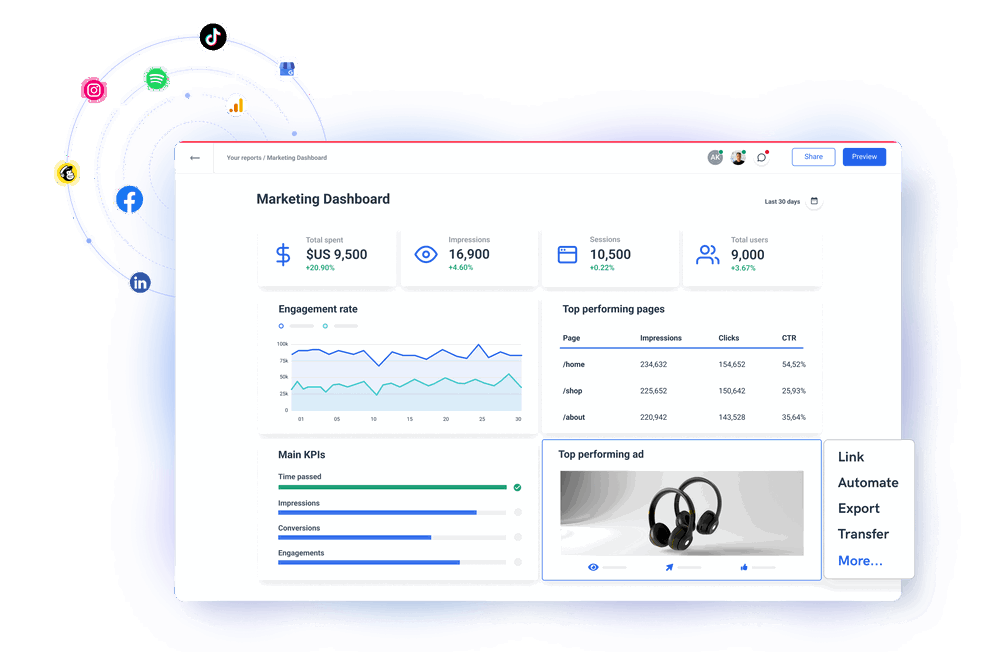
































































The three types of dashboards are:
1. Strategic dashboard — focused on long-term strategies and key metrics on an enterprise level. This dashboard displays complex high-level KPIs that C-level executives use to make data-driven decisions. Such an executive dashboard allows managers to identify weaknesses in their strategies while helping stakeholders understand the progress of general company goals.
2. Analytical dashboard — contains vast amounts of data collected over time to answer questions like “How is the business doing?”. Based on in-depth analysis of big data collected throughout past operations, this dashboard can help you reveal patterns and opportunities, shape strategic aims, and compare trends over time. For example – Is the cash flow higher or lower over the year? Has customer satisfaction increased after workflow innovations in the customer support team? Has a particular marketing campaign been successful?
3. Operational dashboard — shows shorter timeframes and operational processes to reveal whether business performance is on track. For example, this type of dashboard is useful when sales teams need to react quickly on different issues related to pipeline conversions, supply chain, queries, etc. Unlike analytical dashboards, operational dashboards can help project managers establish forecasts and business predictions, as well as react to the information immediately.