LinkedIn Ads Integration
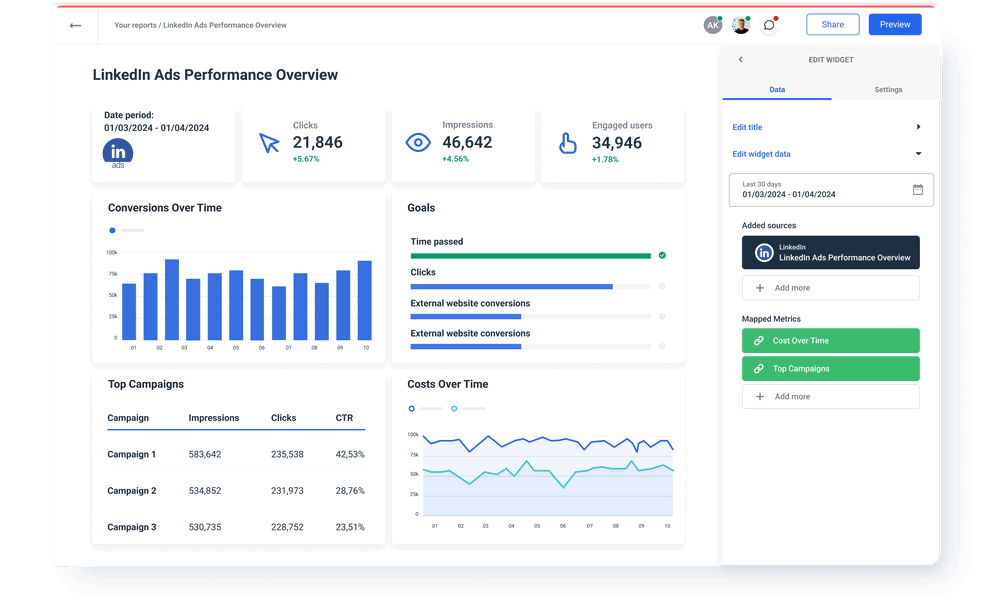
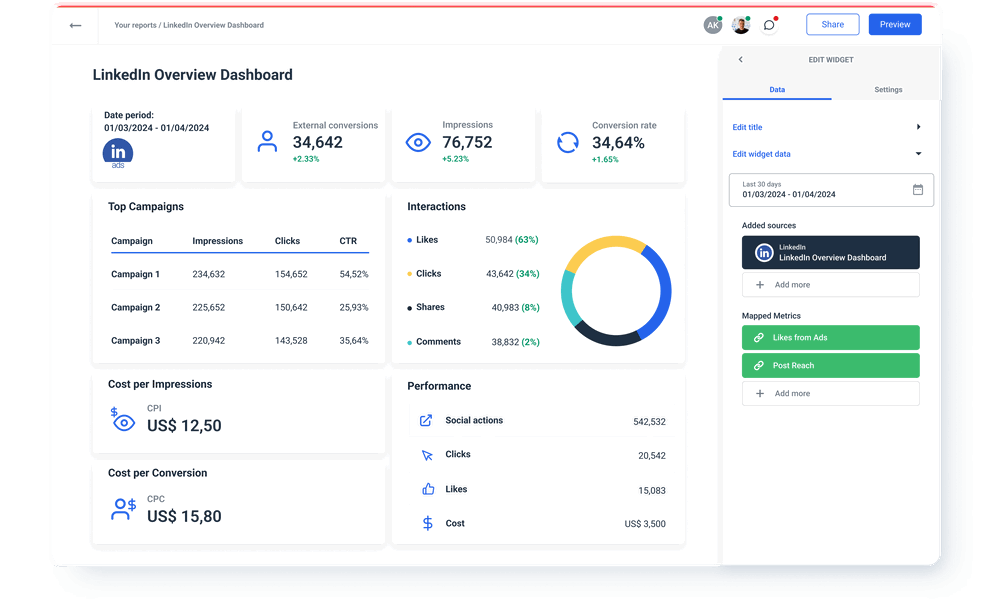
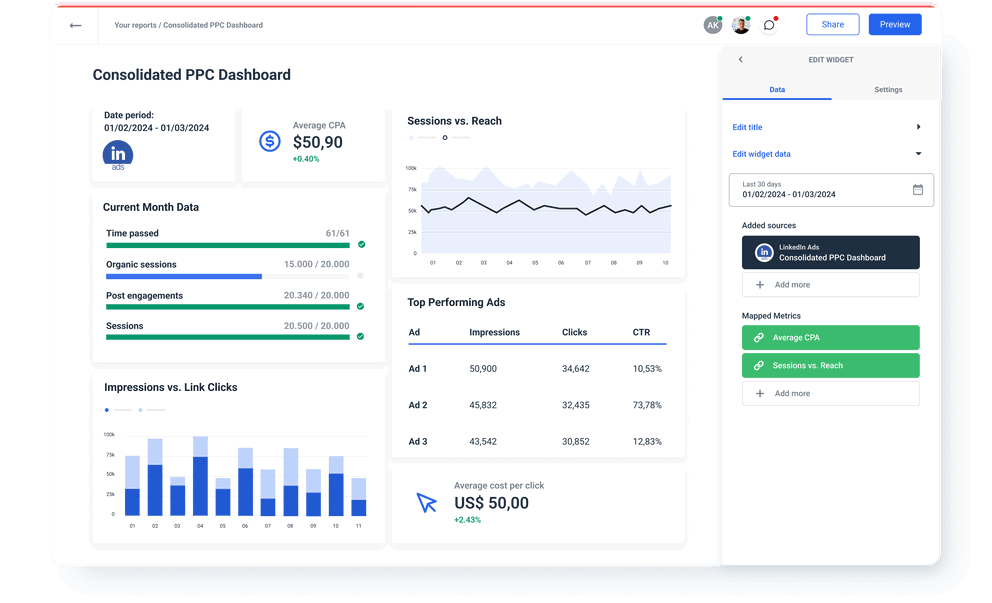
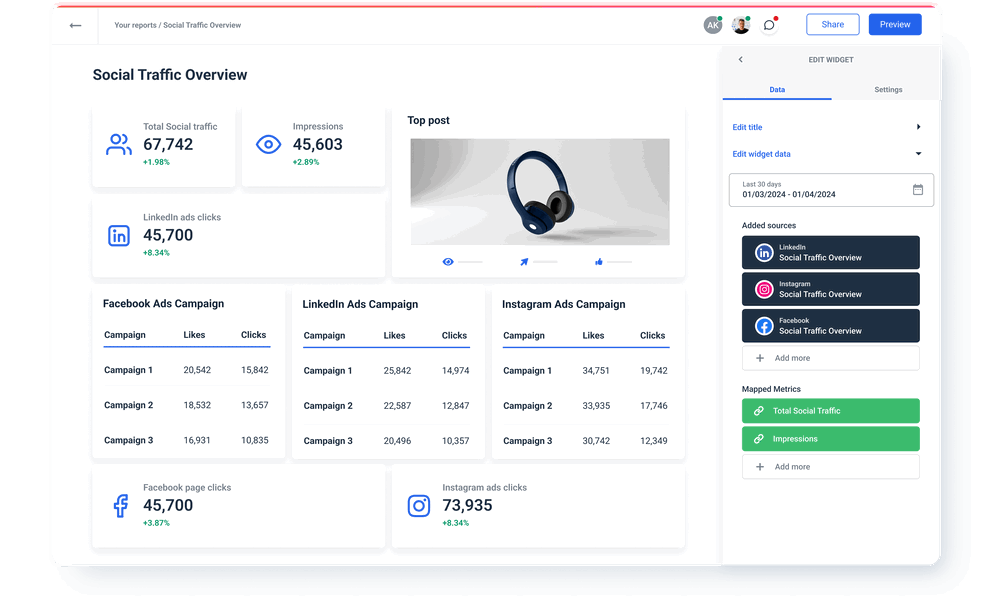
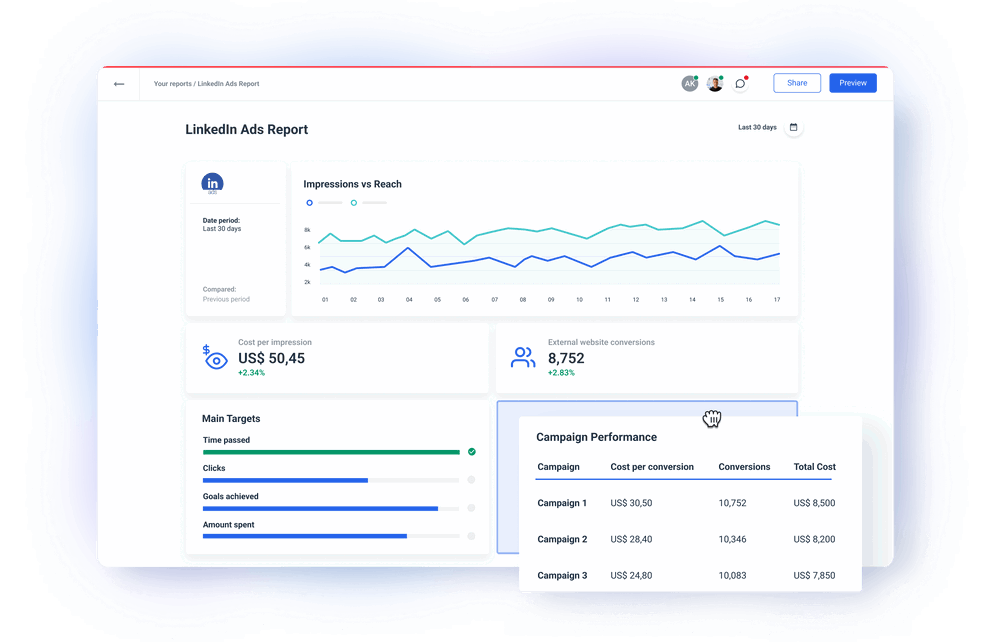
Connect your LinkedIn Ads data and use Whatagraph’s advanced visualization to analyze and share the performance of your LinkedIn Ads campaigns. A fully managed LinkedIn Ads integration pulls data directly from your LinkedIn Ads account to our stunning custom reports. Effortlessly analyze the attribution and audience insights that engage with your ad creative. Blend and organize LinkedIn Ads metrics before visualization to present only the most impactful data points. Share insights from your marketing data automatically as scheduled emails or live links.

Manage data from your LinkedIn Ads API in one place

Blend your LinkedIn Ads campaign performance insights with conversion data from other advertising platforms


LinkedIn Ads metrics available instantly in Whatagraph
All
LinkedIn Ads Campaign
3LinkedIn Ads Analytics
113Search...
Campaign total budget amount
Campaign unit cost amount
Campaign daily budget amount
Card clicks
Card impressions
Comment likes
Document completions
Document first quartile completions
Document midpoint completions
Document third quartile completions
Download clicks
Job applications
Job apply clicks
Post click job applications
Post click job apply clicks
Post click registrations
Post view job applications
Post view job apply clicks
Post view registrations
Reactions
Registrations
Talent leads
Viral card clicks
Viral card impressions
Viral comment likes
Viral document completions
Viral document first quartile completions
Viral document midpoint completions
Viral document third quartile completions
Viral downloads clicks
Viral job applications
Viral job apply clicks
Viral post click job applications
Viral post click job apply clicks
Viral post click registrations
Viral post view job applications
Viral post view job apply clicks
Viral post view registrations
Viral reactions
Viral registrations
Post click conversions
Ad unit clicks
Company page clicks
One click leads (viral)
Video first quartile completions
Text url clicks
Video starts
External website conversions (viral)
Video third quartile completions
Likes
Comments (viral)
Video third quartile completions (viral)
One click leads
Full screen plays
Follows
One click lead form opens (viral)
Conversion value
Follows (viral)
Other engagements
Video completions (viral)
Opens
Lead generation mail interested clicks
Total engagements
Video views
Impressions (viral)
Video views (viral)
Headline Clicks
Headline Impressions
Valid Work Email Leads
Cost in local currency
Likes (viral)
Other engagements (viral)
Video midpoint completions (viral)
Shares
Full screen plays (viral)
Video midpoint completions
Total engagements (viral)
External website post view conversions (viral)
Company page clicks (viral)
Action clicks
Shares (viral)
Video completions
External website post view conversions
Comments
Video starts (viral)
Cost in USD
Landing page clicks
One click lead form opens
Impressions
Landing page clicks (viral)
External website post click conversions (viral)
External website conversions
Video first quartile completions (viral)
Lead generation mail contact info shares
Clicks
Clicks (viral)
Cost per click
Cost per 1000 impressions
Cost per engagement
Cost per conversion
Average engagement
Social actions
Other clicks
InMail clicks
Open rate
Click to open rate
Cost per send
Cost per open
Engagement rate
Average CTR
Cost per lead
Lead form completion rate
InMail sends
Conversion rate
Return on ad spend
Approximate Unique Member Reach
Check out related integrations:
Explore marketing automation and custom report features


Pick a template and start reporting
Frequently Asked Questions
What is the difference between data connectors and fully managed data integrations offered by Whatagraph?
A data connector is a piece of software, typically built by a third party, to connect two different platforms.
On the other hand, Whatagraph’s integration directly connects to LinkedIn Ads API with no third-party software in the middle. As a result, the data flow is more stable and secure, and the connection performance doesn’t depend on the policies of third-party vendors.
What other marketing data sources can I connect with Whatagraph?
Apart from LinkedIn Ads sources, you can connect a range of popular marketing platforms like Google Analytics 4, social media like Facebook Page and Instagram, PPC like Google Ads, Microsoft Advertising, Amazon Ads, CRMs like Salesforce and HubSpot, as well as email marketing and e-commerce platforms.
Can I export data from LinkedIn Ads reports?
Yes, you can export data as Excel spreadsheets or CSV files. This way, you can easily move it to Tableau, Power BI, or other data destinations for further analysis.
Do I need Looker Studio to visualize LinkedIn Ads data?
No, you don’t need Looker Studio (Google Data Studio) or any other tool to visualize your LinkedIn Ads data. Whatagraph is an all-in-one marketing data platform to connect, organize, visualize, and share all your data. This makes Whatagraph a better choice than other data platforms that provide only the connection functionality, so users need to use a separate tool to visualize their ad performance and goal completions.
How to connect LinkedIn Ads data to Whatagraph?
Whatagraph has a pre-built LinkedIn Ads connector, so you don’t have to purchase and configure third-party data connectors. Adding a new LinkedIn Ads source is simple:
1. Go to the Data Sources menu and locate LinkedIn Ads among the channels.
2. Click Connect an account.
3. From there, you’ll be redirected to log in to your LinkedIn Ads account.
4. Once forwarded to LinkedIn, authorize to connect data from LinkedIn Ads, select your account and name your data source.
5. The new LinkedIn Ads source will appear.
You have successfully created a connection to your LinkedIn Advertising API. Create a custom report or dashboard and add your LinkedIn Ads account as a source.
When you connect LinkedIn Ads data to Whatagraph, you can organize datasets to get more granular insights by device, campaign ID, date, etc. You can visualize data in various widgets and share the insights via automated email attachments or live links for near real-time access.
Effortlessly create reports and dashboards
What others think about Whatagraph
I made a switch from GDS and Sheets for reporting to Whatagraph, and I am saving literal hours each week on performance report creation. Our small firm actually managed to onboard 2 new clients as a result of all the time we saved on managing data and reporting. The customer service is also really helpful and easy to reach.
Having active customer support to help fix any issues was a big contributor, but we also really liked the ability to save templates and connect sources to multiple charts/widgets at once without having to edit them individually. And having the grid layout is much easier to stay consistent with than the free form setup that Data Studio has.
The system has standard templates that are easy and fast to use. Also you can build your own report with lightning speed. It is very easy to use, has a lot of integration, and let get started very fast.
We love Whatagraph - we would definitely recommend and our account manager is great! I love how easy this tool is to use, everyone on the team finds it much more user-friendly than other dashboards. Integration was easy, we sent some example reports to the team who duplicated these for us. We literally had to log in and send it to our clients!
We are showing our clients the work that we're doing for them and this is incredibly important for our clients ROI. They want to see results and having a tool like Whatagraph that can show data from virtually every source we use is hugely important.
The tool is easy to use; you do not need to have development resources. Even my junior project managers are capable of making campaign reports in minutes. There are a lot of pre-made templates you can use as well as many pre-made widgets.
Really easy to connect data sources within the tool. The library of report templates has been helpful. The customer support team has been responsive to all of our needs. Our team enjoys the simplicity of setting up the reports and how the data is presented.