
What To Include in a Marketing Strategy Report Template
A strong marketing strategy report shows clearly how your marketing efforts are leading to growth and how you should move forward.
Each section should clearly show what you’re doing, why it matters, and how your marketing campaigns are performing, and help you create data-driven marketing plans for the future.
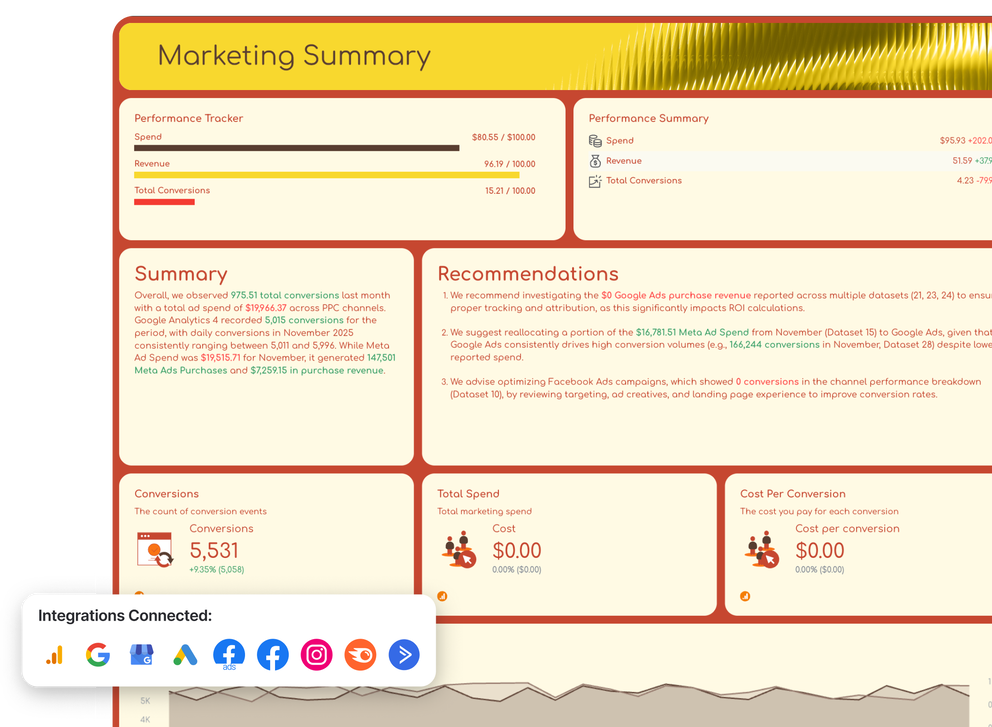
1. Marketing Summary
Channels connected: All your marketing channels
This section gives stakeholders a quick snapshot of overall marketing performance and direction.
What to include:
- Reporting period (e.g. last 30 days, month-to-date)
- Core KPIs such as total sessions, conversions, revenue, and conversion rate
- Month-over-month or period-over-period performance comparison
- Short written summary and recommendations highlighting key wins, losses, and next steps
2. Website Performance
Channels connected: Google Analytics 4, Google Search Console
This section shows how your website supports your marketing strategy and lead generation.
What to include:
- Total sessions, users, and new users
- Engagement metrics such as bounce rate and average engagement time
- Conversion rate and total conversions
- Top-performing landing pages by sessions and conversions
3. SEO Performance
Channels connected: Semrush, Google Analytics 4, Google Search Console
This section explains how organic search contributes to long-term growth.
What to include:
- Key performance indicators like Organic search sessions and users
- Google Search Console metrics such as impressions, clicks, CTR, and average position
- Top queries and pages driving organic traffic
- Keyword rankings
- Month-over-month trends in organic traffic and search visibility
4. Google My Business Performance
Connected channels: Google My Business
This page should highlight how well the brand performs in local search and how users interact with the business listing.
What to include:
- Profile views and local searches
- Website clicks, calls, and direction requests
- Branded vs. discovery search breakdown
- Action trends over time
- Reviews and ratings, when relevant
5. Paid Advertising Performance
Channels connected: Google Ads, Facebook Ads
This section evaluates how ad campaigns support marketing goals and budget efficiency.
What to include:
- Campaign performance for each channel
- Clicks, impressions, and click-through rate (CTR)
- Conversions and cost per conversion
- Performance comparison across campaigns and time periods
6. Social Media Performance
Channels connected: Facebook, Instagram
This section shows how social channels support brand awareness and engagement.
What to include:
- Impressions and engagement (likes, comments, shares) by platform
- Traffic and conversions from social media
- Campaign-level performance summaries
- Platform breakdowns (e.g. LinkedIn, Facebook)
7. Email Marketing Performance
This section tracks how email supports engagement and revenue.
What to include:
- Open rate and click-through rate
- Email-driven sessions and conversions
- Performance by campaign or newsletter
- Trends across reporting periods