




What Should a Cross Channel Analytics Dashboard Template Include
A strong cross-channel analytics report template should do four things well:
- Unify performance across channels
- Focus on business-level KPIs
- Make channel comparisons easy
- Turn data into clear next actions
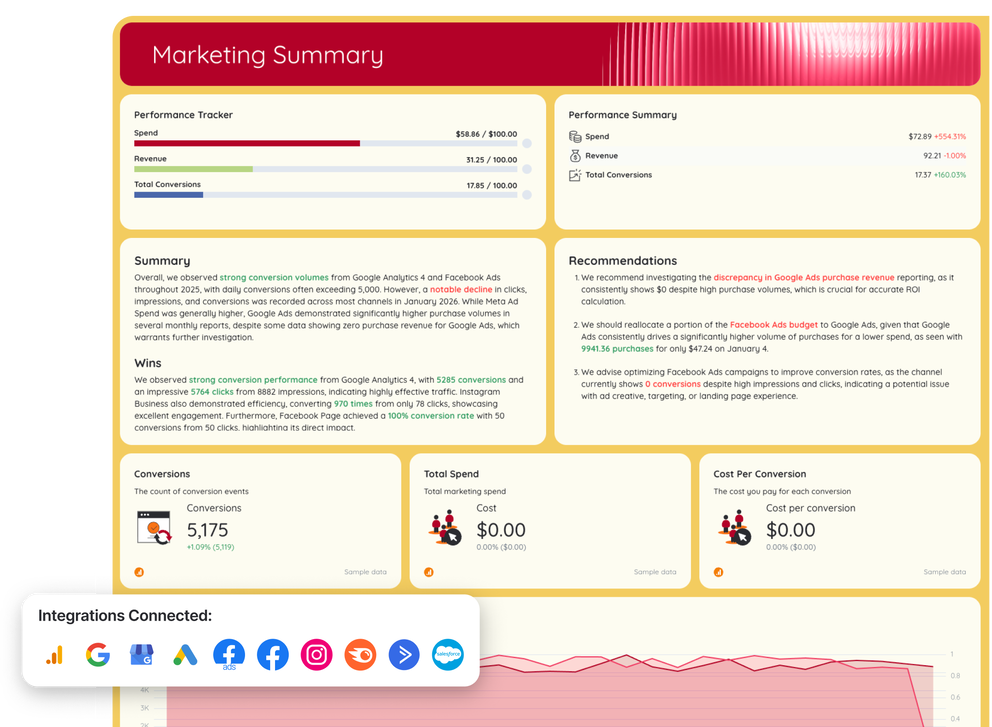
At a minimum, it should start with a top-level marketing summary that pulls key metrics like spend, traffic, conversions, revenue, and return on investment into one view, so stakeholders don’t have to jump between marketing platforms.
From there, the report should break performance down by channel—SEO, paid search, paid social, organic social, email, and CRM—using consistent KPIs to show how each channel contributes to the customer journey.
Here’s what you should include in a cross channel analytics report template, according to marketers who have built cross channel reports on Whatagraph.
Section 1: Marketing Summary
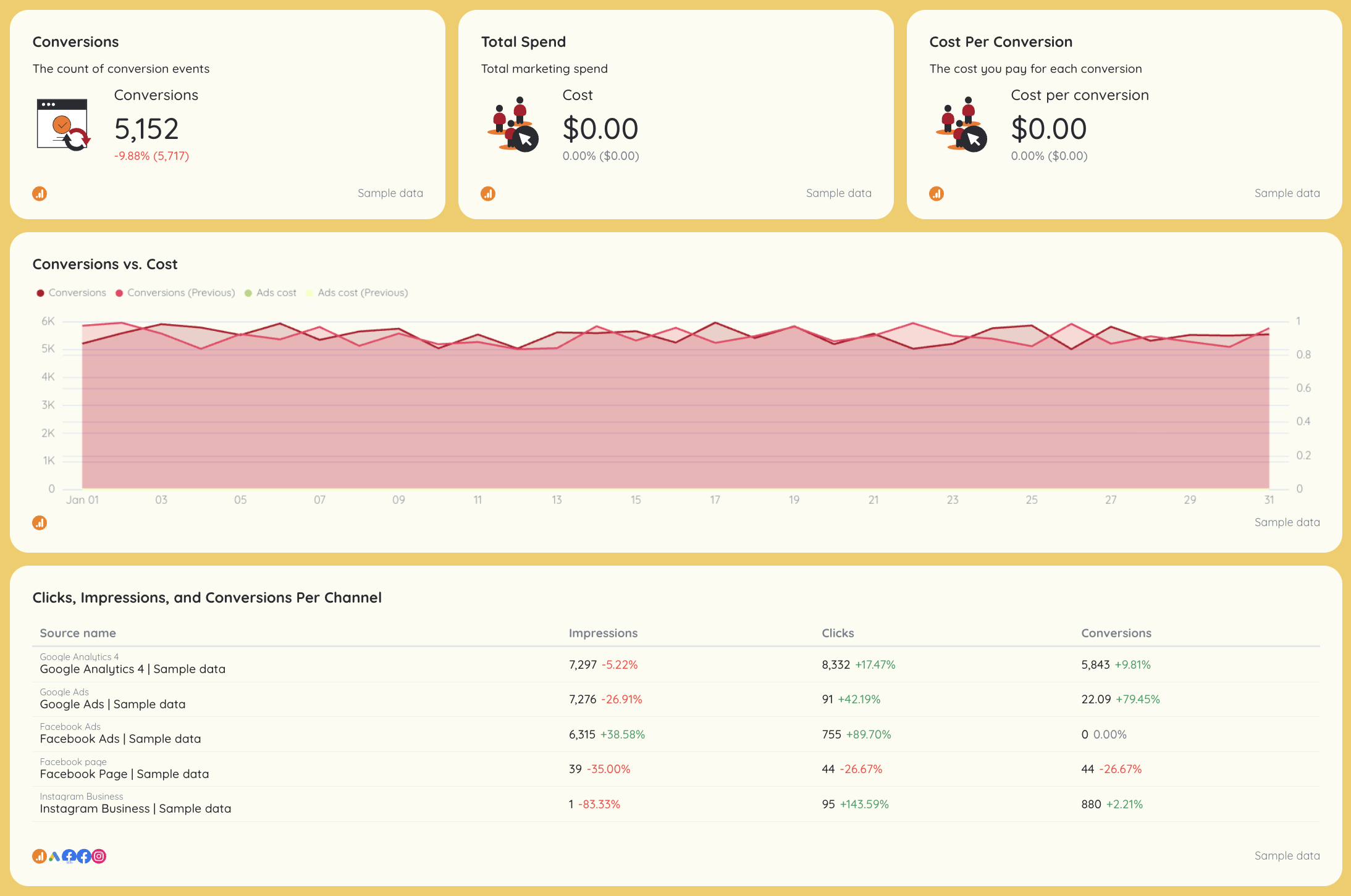 Channels connected: GA4, Google Ads, Facebook Ads, Organic Social
What it is: An executive snapshot of overall marketing performance.
Which metrics to display: Spend, conversions, revenue, CPA, ROAS, key metrics by channel.
Which charts to use: KPI scorecards, line charts, stacked bars, channel comparison tables.
Why it matters: Gives stakeholders a real-time view of marketing performance and ROI.
Section 2: Website Performance
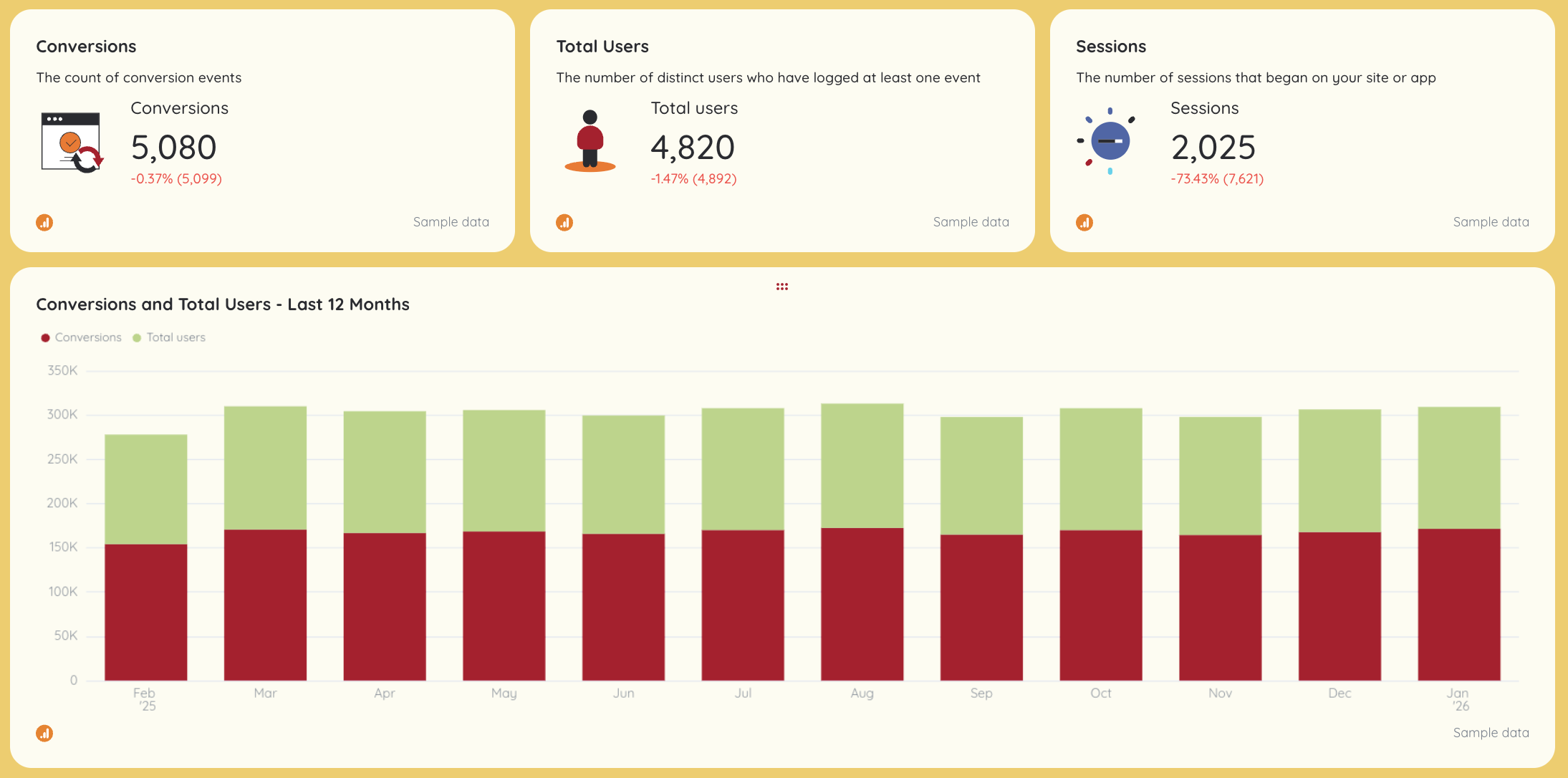 Channels connected: Google Analytics 4
What it is: Your core performance and conversion hub.
Which metrics to display: Users, sessions, conversions, conversion rate, engagement, revenue.
Which charts to use: Line charts, funnel views, landing page tables, device breakdowns.
Why it matters: Connects all marketing efforts to outcomes across the customer journey.
Section 3: SEO Performance
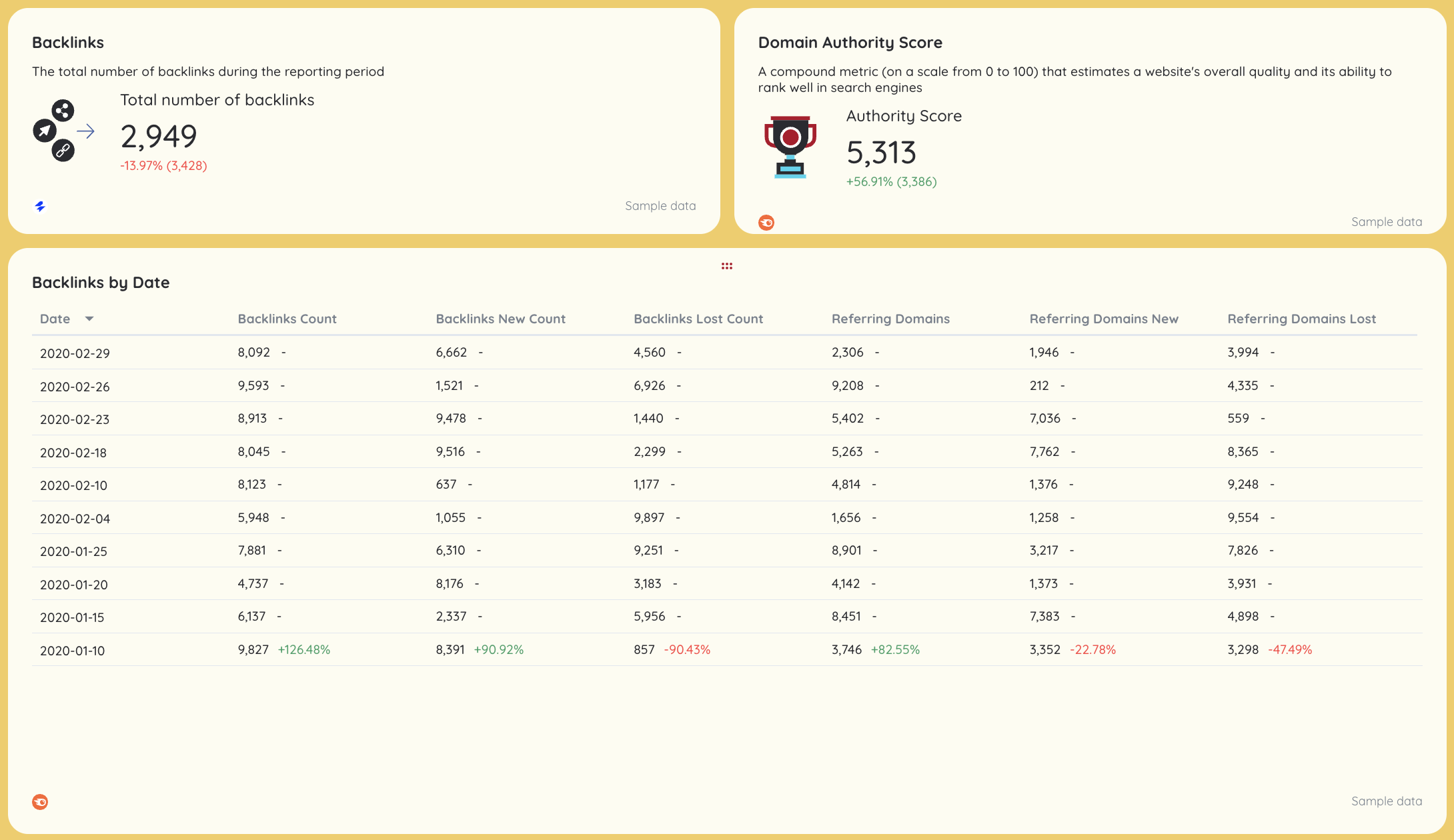
Channels connected: Google Search Console, GA4
What it is: Organic performance tied to conversions, not just traffic.
Which metrics to display: Organic sessions, CTR, average position, conversions.
Which charts to use: Trend lines, landing page tables, query tables.
Why it matters: Aligns SEO with real business impact.
Section 4: GEO Performance (AI Traffic)
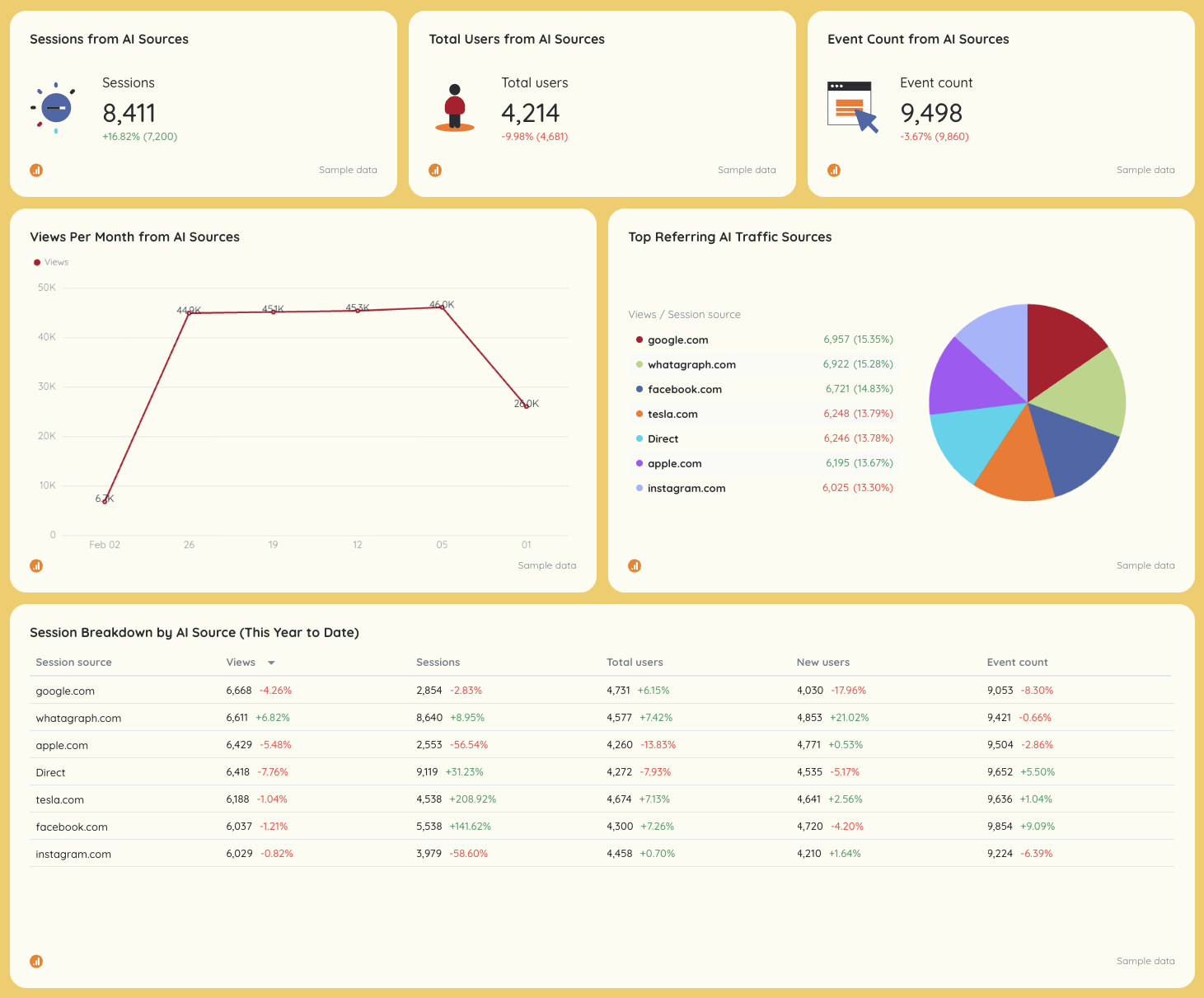
Channels connected: GA4, GSC
What it is: Visibility and traffic from AI-driven discovery platforms.
Which metrics to display: AI sessions, views, engagement, conversions.
Which charts to use: Line charts, referrer bar charts, landing page tables.
Why it matters: Tracks emerging attribution touchpoints in digital marketing.
Section 5: Keyword Rankings
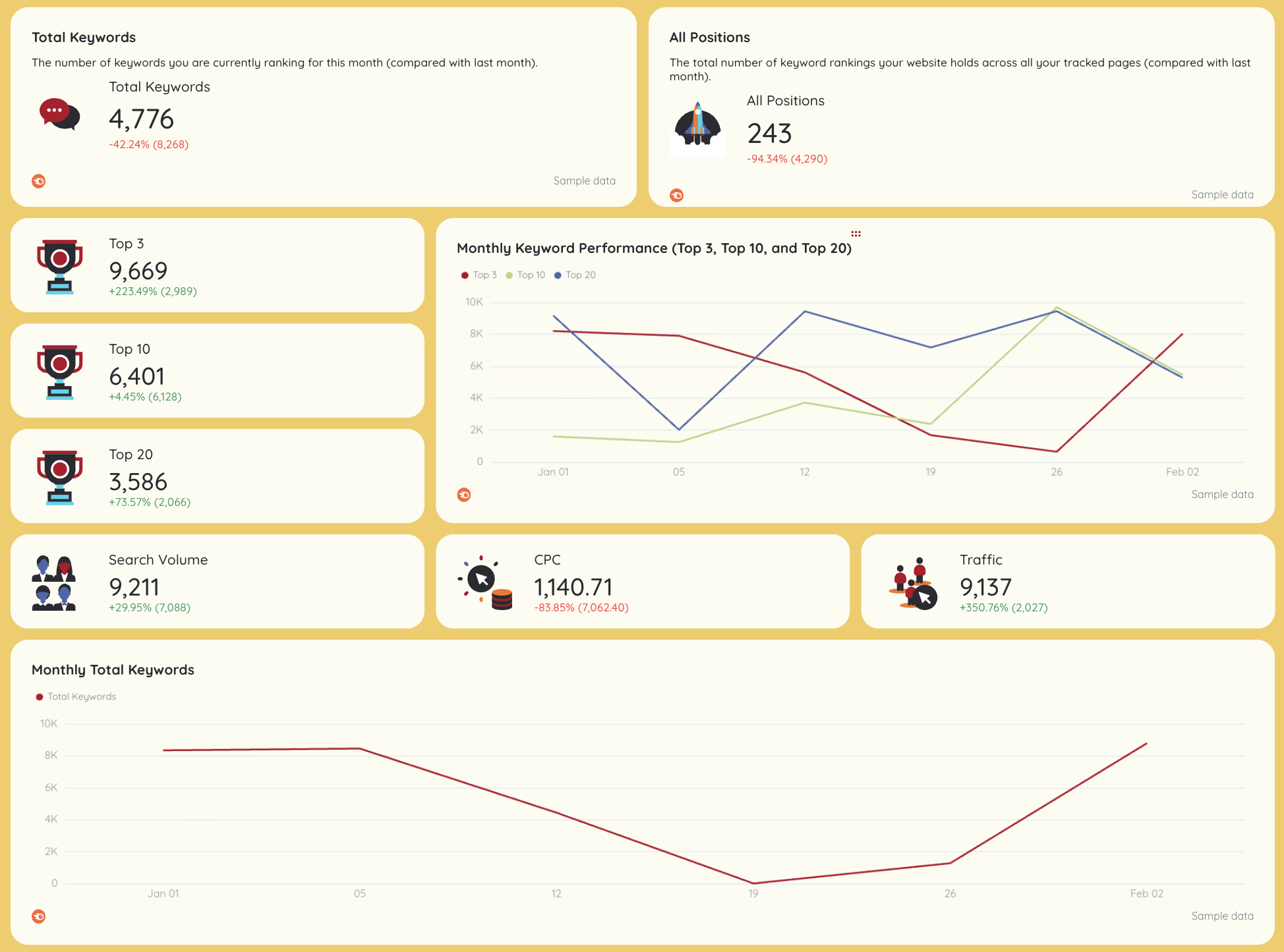
Channels connected: Semrush
What it is: Keyword visibility and opportunity tracking.
Which metrics to display: Top 3 / 10 / 20 keywords, movements, CPC, search volume.
Which charts to use: Distribution charts, trend lines, keyword tables.
Why it matters: Guides SEO priorities and PPC vs organic decisions.
Section 6: Local Search
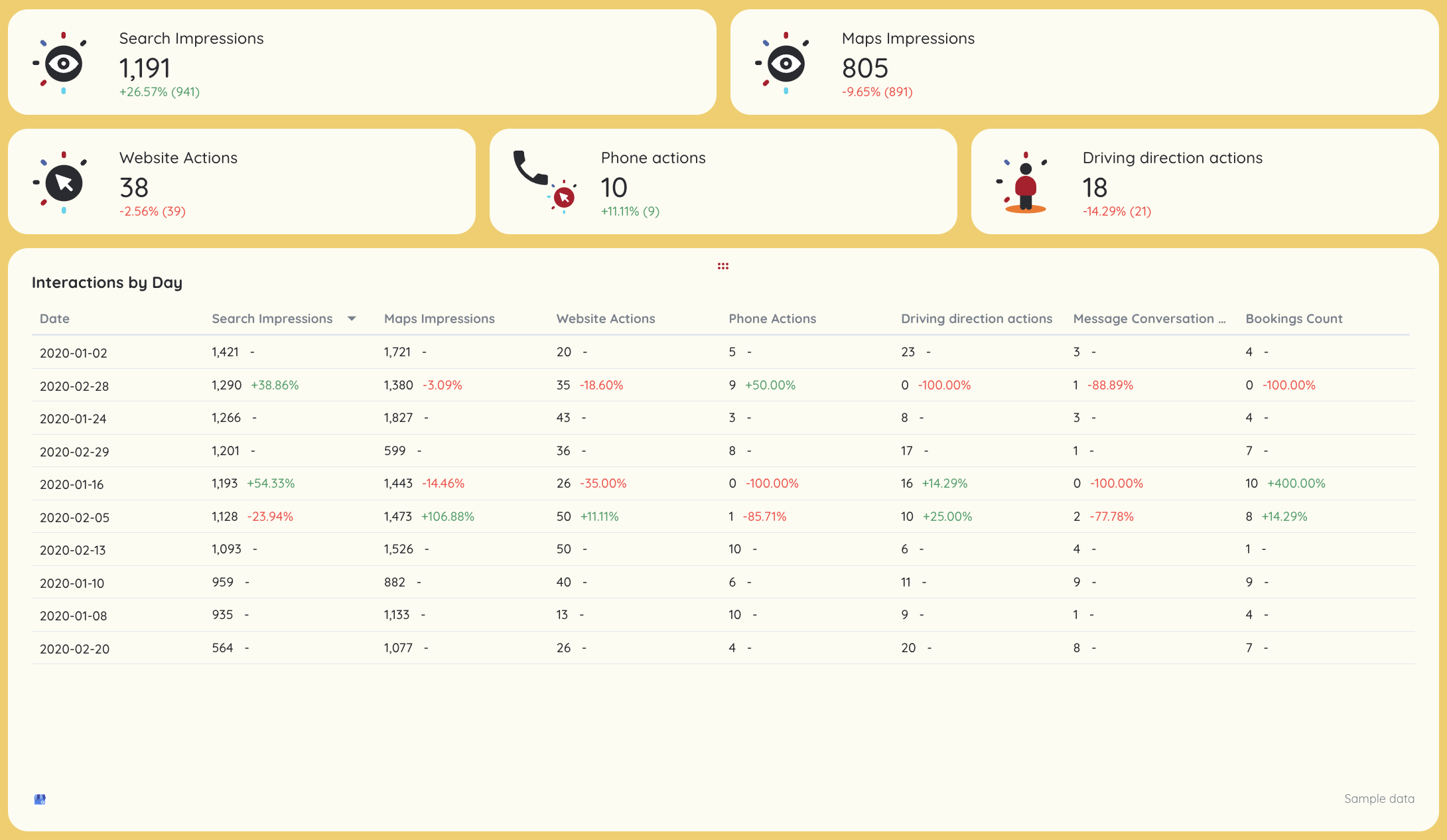
Channels connected: Google Business Profile
What it is: Local intent and offline-adjacent performance.
Which metrics to display: Maps impressions, calls, website actions, reviews.
Which charts to use: KPI cards, daily trend charts, device breakdowns.
Why it matters: Captures high-intent local engagement and trust signals.
Section 7: Paid Media (Google Ads & Meta Ads)
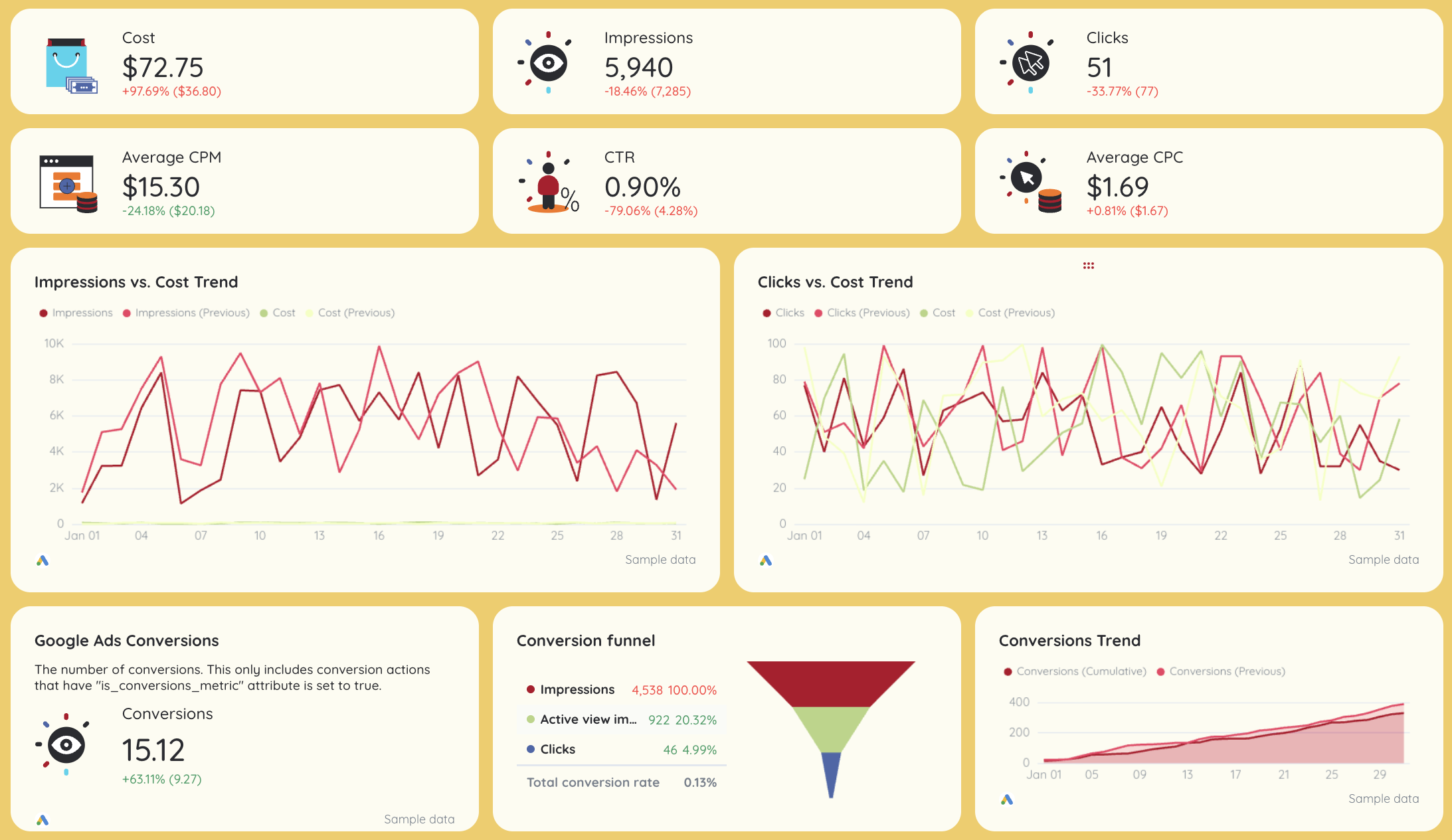
Channels connected: Google Ads, Facebook Ads
What it is: Paid channel performance and optimization view.
Which metrics to display: Spend, impressions, CTR, CPC, conversions, ROAS.
Which charts to use: Funnel charts, trend lines, campaign tables.
Why it matters: Enables budget optimization and cross-channel comparison.
Section 8: Organic Social Media
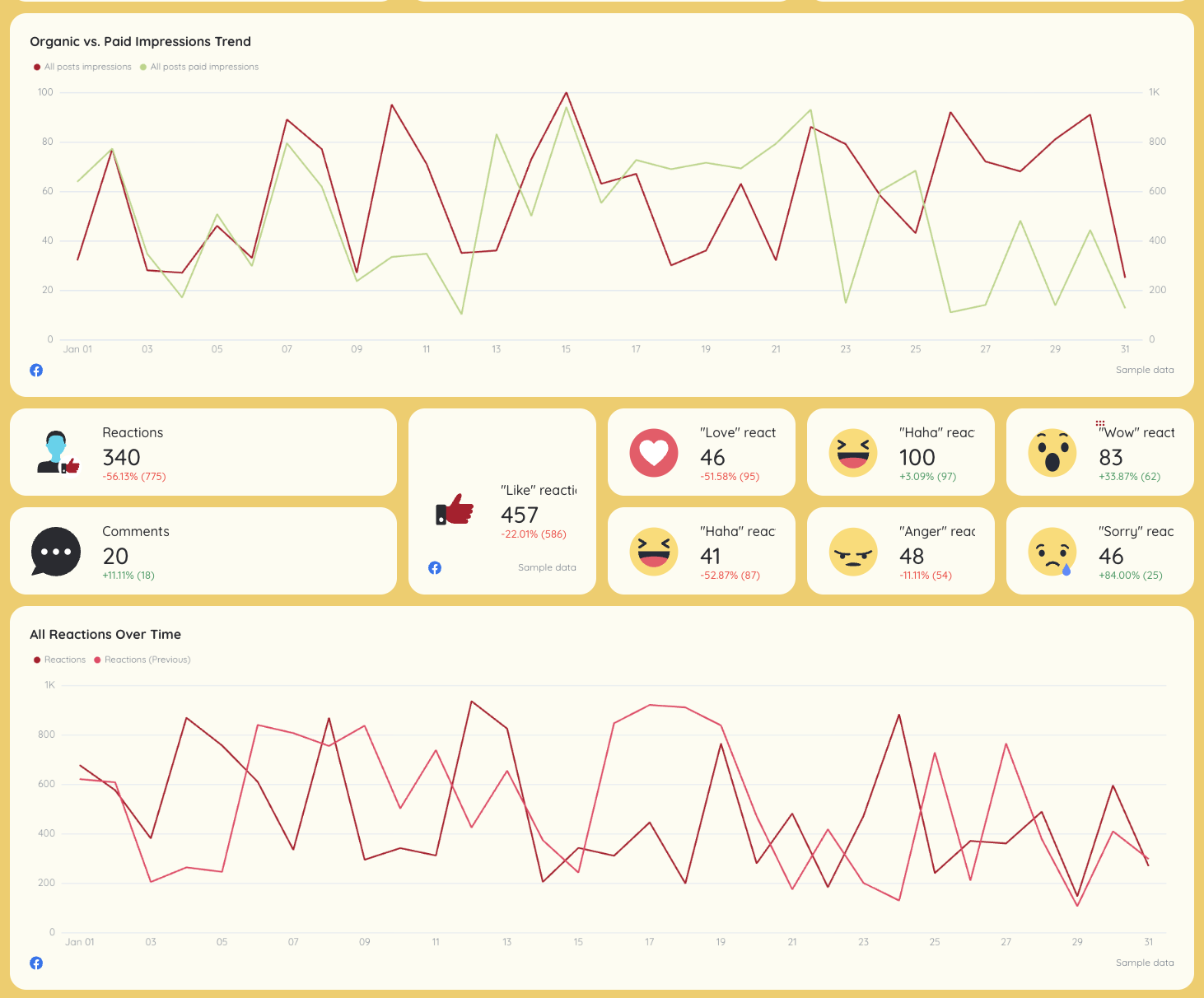
Channels connected: Instagram, Facebook
What it is: Brand engagement and assistive channel tracking.
Which metrics to display: Followers, clicks, conversions.
Which charts to use: Line charts, bar charts, comparison tables.
Why it matters: Shows supporting impact beyond paid campaigns.
Section 9: Email Marketing
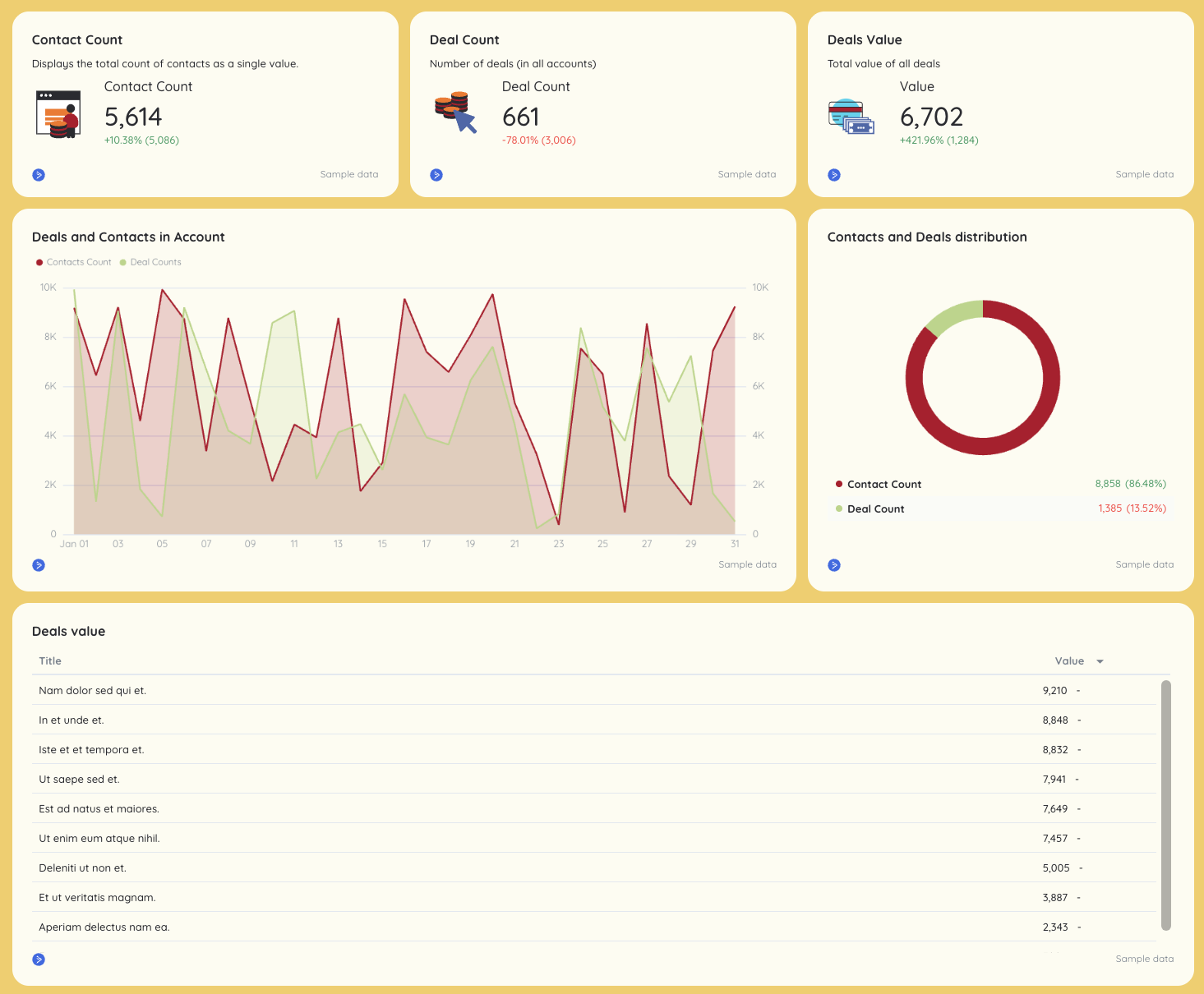
Channels connected: ActiveCampaign
What it is: Owned-channel performance.
Which metrics to display: Open rate, click-through rate, conversions.
Which charts to use: KPI tiles, campaign tables, trend lines.
Why it matters: Supports attribution and retention strategies.
Section 10: CRM & Revenue
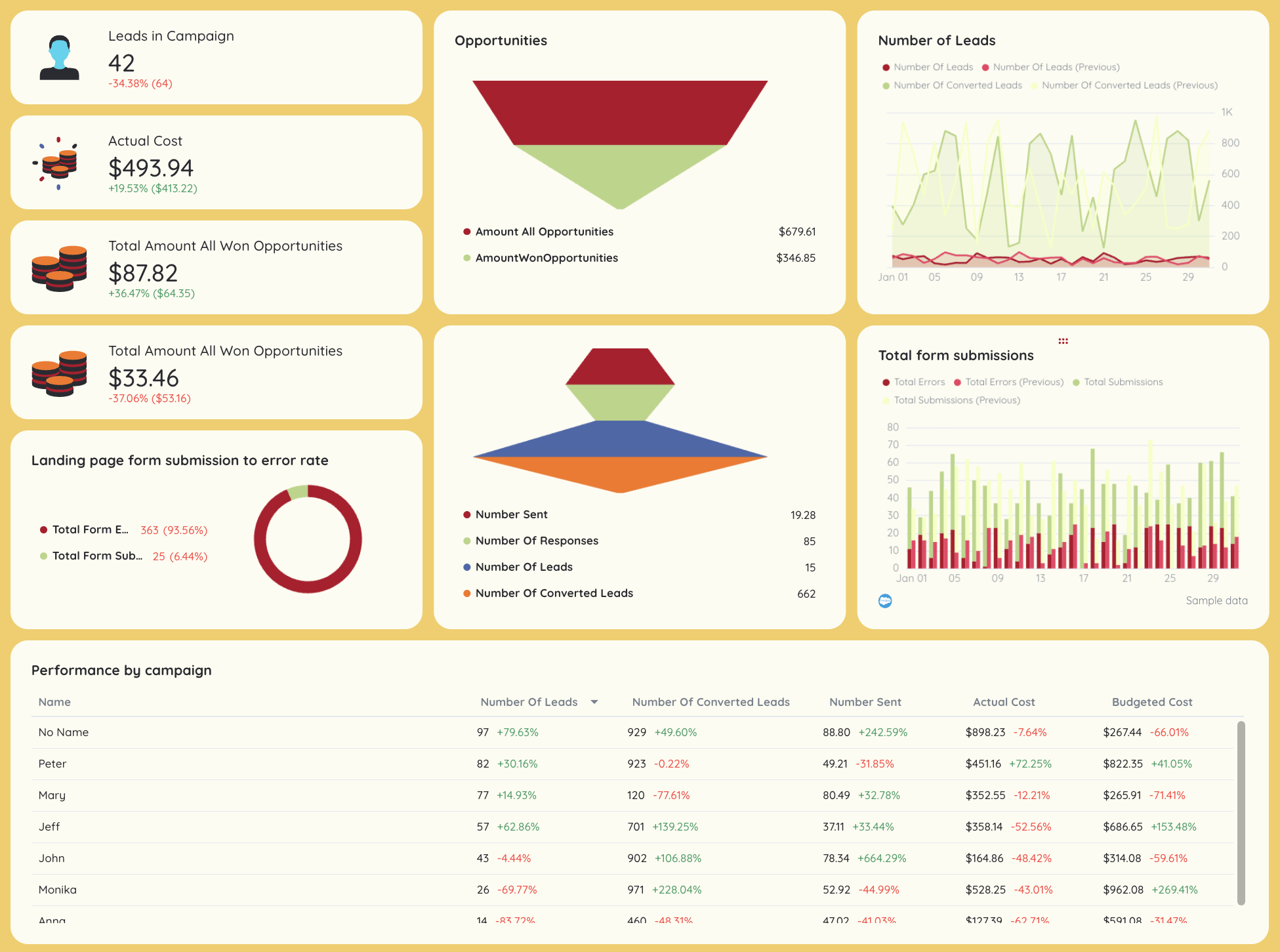
Channels connected: Salesforce
What it is: Revenue and pipeline attribution.
Which metrics to display: Leads, opportunities, revenue, conversion rates.
Which charts to use: Funnels, revenue trend charts, source tables.
Why it matters: Proves marketing ROI and supports data-driven decisions.