Our Vetted List of 15 White Label Marketing Tools for Agencies (2026)
Running a marketing agency is hard.
You’re delivering results for clients, pitching new business, managing a growing team, and somewhere in the middle of all that, you’re expected to add more services without blowing up costs or credibility.
White-label marketing tools sound like the obvious answer. But in reality, they’re a minefield.
Most “reviews” are biased. Pricing is vague. And too many so-called white-label platforms fall apart the moment a client sees a weird subdomain, broken integration, or an email from a brand they’ve never heard of.
This guide exists to fix that.
Inside, you’ll find a vetted list of the best white-label marketing tools for agencies in 2026, broken down by the actual jobs agencies need to get done – reporting, analytics, SEO, paid media, and more.
We’ll also give you a clear framework for evaluating any white-label tool, so you can tell the difference between something that quietly eats your margins… and something you can confidently brand, scale, and profit from.

Feb 02 2026●12 min read


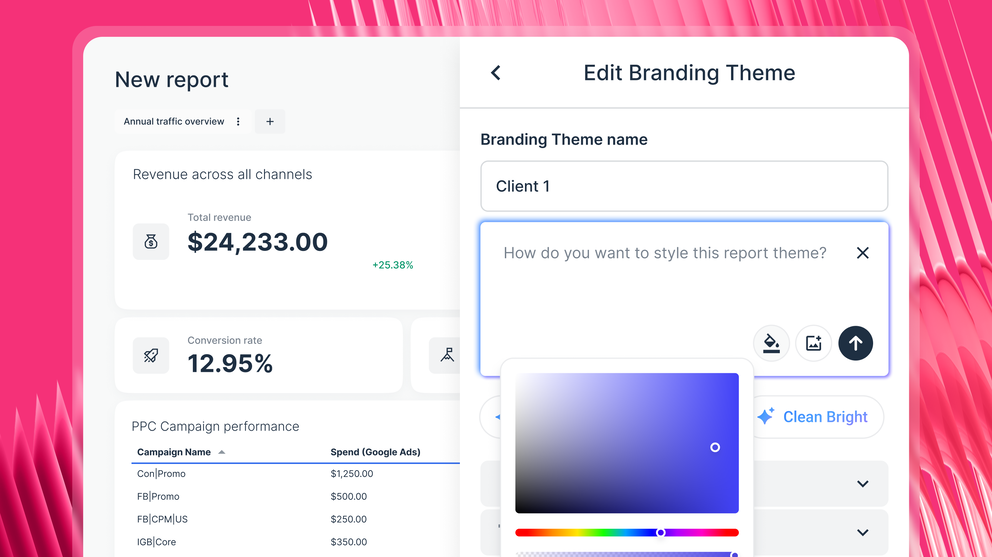
Research shows that in B2B services, like the ones agencies sell to their clients, branding plays a real role in how clients decide who they trust – and who they don’t.
Today, the best white-labeling marketing tools today decouple your value from your hours and give you a branded ecosystem wherein:
- Your clients get a 24/7 source of truth under your domain.
- Your team delivers specialized services without you needing to swallow a $47,000 monthly payroll for a 6-person in-house team.
- Your agency embeds itself deeper into the client’s workflow, driving materially higher retention and long-term stickiness.
In the next seven minutes, you’ll find the specific tools that turn your service into a proprietary platform.
The Evaluation Framework: How We Bucket The 15 Best White Label Marketing Tools for Agencies in 2026
If you strip away the vendor language and feature lists, the criteria agencies keep asking is surprisingly consistent:
“For me it would be scalable for small digital agencies or freelancers with handful of clients (affordable), allow customized reports/widgets so I can choose high level metrics my clients care about and understand, offer login for each client to view their portal, integrate with Google ads, G4, search console, meta, mail chimp, SEMrush and more.”
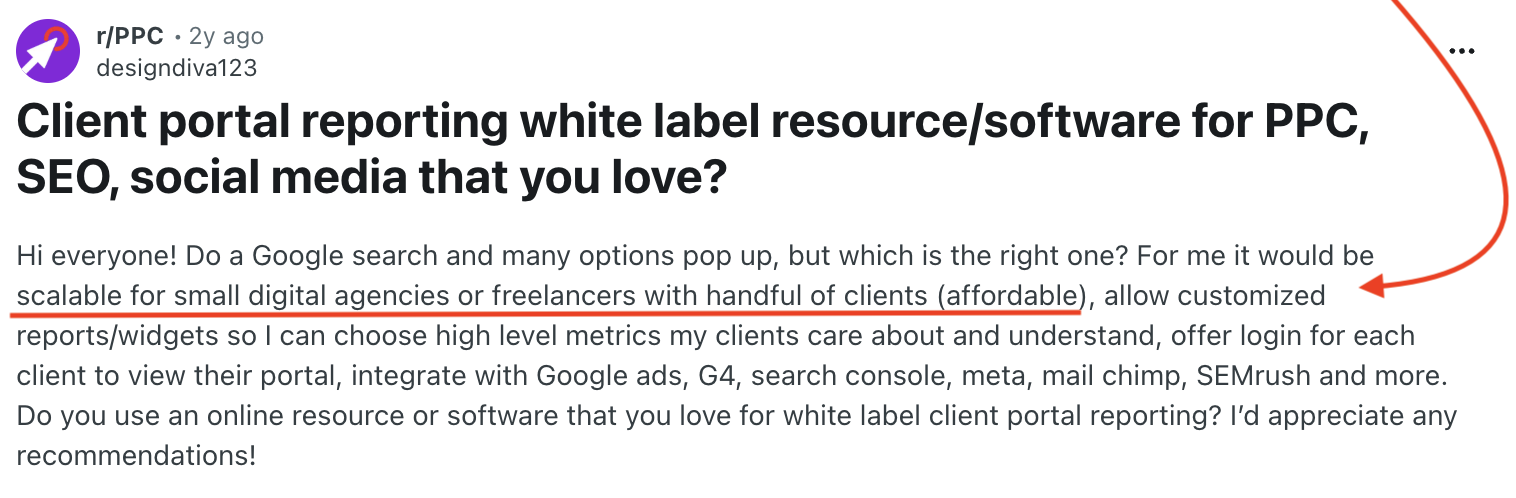
Source: Reddit
We hear the same thing in sales calls. We hear it in onboarding conversations. We hear it when agencies explain why their current setup stopped working.
At a high level, agencies evaluating white-label marketing tools are trying to solve four things at once:
- They want everything clients touch to feel owned: Reports, portals, dashboards, emails; without stray vendor logos or confusing URLs.
- They need systems that scale with clients: So growth doesn’t automatically mean hiring another analyst just to keep reporting and delivery running.
- They want to cut down tool sprawl: Replacing fragile workflows stitched together with exports and manual checks.
- They need all of this to make financial sense: Software costs shouldn’t erode margins.
Instead of one long, flat list, we grouped the tools below by jobs-to-be-done (JTBD).
These buckets are here to help you scan, jump, and find the tools that are most relevant to where your agency is right now.
Some agencies will live almost entirely in one category. Others will pull from two or three. That’s okay.
Use the buckets as a navigation aid; then dive into the individual tools for the specifics:
JTBD | What’s the core job? | Top tools |
| Reporting and analytics | Moving from manual screenshot reporting to a 24/7 branded portal that saves billable time. | Whatagraph, DashThis, Swydo |
| CRM and business Infrastructure | Turning your service into a product with a branded dashboard that handles everything from leads to invoices. | GoHighLevel, Vendasta, ActiveCampaign |
| SEO and search visibility | Providing enterprise-level audits and rank tracking that looks like your own proprietary technology. | SE Ranking, AgencyAnalytics, Semrush |
| Social and reputation | Managing hundreds of social profiles and client reviews under your own brand and approval workflows. | SocialPilot, Sendible, BigMailer, Mailchimp |
| Niche service add-ons | Expanding your offerings (call tracking, email, programmatic) without your clients seeing a third-party vendor. | CallRail, BidsCube |
Alright, now let's get into the acutal tools, starting off with…
1. Whatagraph
| Bucket | Reporting and analytics |
| Best for | Marketing agencies looking for an all-in-one automated reporting tool with powerful white-label capabilities built in. |
| G2 rating | 4.5/5 ⭐ |
You’re reading this on the Whatagraph blog, we know how it looks. But we built Whatagraph because we were tired of the screenshot-and-Canva nightmare ourselves.
If you think we’re being a bit convenient by putting ourselves at #1, just read the 277+ reviews on G2.com from marketers who use Whatagraph to white-label their marketing reports.
Whatagraph is a ridiculously easy-to-use marketing intelligence platform that pulls from 55+ sources (Meta, Google Ads, LinkedIn, etc.) and lets you create a single, beautifully branded story for your clients.
Key white-label features:
- Full CNAME and custom domains: Your client-facing portal doesn't live on “app.whatagraph.com”; it lives on “reports.youragency.com,” making the software feel like a native extension of your website.
- Whatagraph IQ (AI-assisted styling): Ask AI to generate complete reports from a prompt, automatically apply branded themes from a screenshot of your brand guidelines, and get plain-language summaries that explain performance.
- Custom report emails: You can personalize automated report emails so they are sent from your own domain (e.g., reports@youragency.com).
- Global branding themes: Set your agency’s hex codes and fonts at the global team level. Every new report or widget created will automatically inherit these settings, ensuring brand consistency across 100+ clients.
- Client access and permissions: Grant clients their own logins and controlled access to dashboards so they can self-serve performance data any time without contacting your team.
Below, I’m inside my own Whatagraph workspace, editing a live client report with Whatagraph IQ - a suite of AI features to create, style, and analyze your reports. See how easy it is to switch fonts, update brand colors, and apply a new theme so the report matches my brand’s visual identity.
I’m also swapping out the default logo, turning off the “Powered by Whatagraph” header, and replacing it with my own header and footer so the report looks fully owned end-to-end.
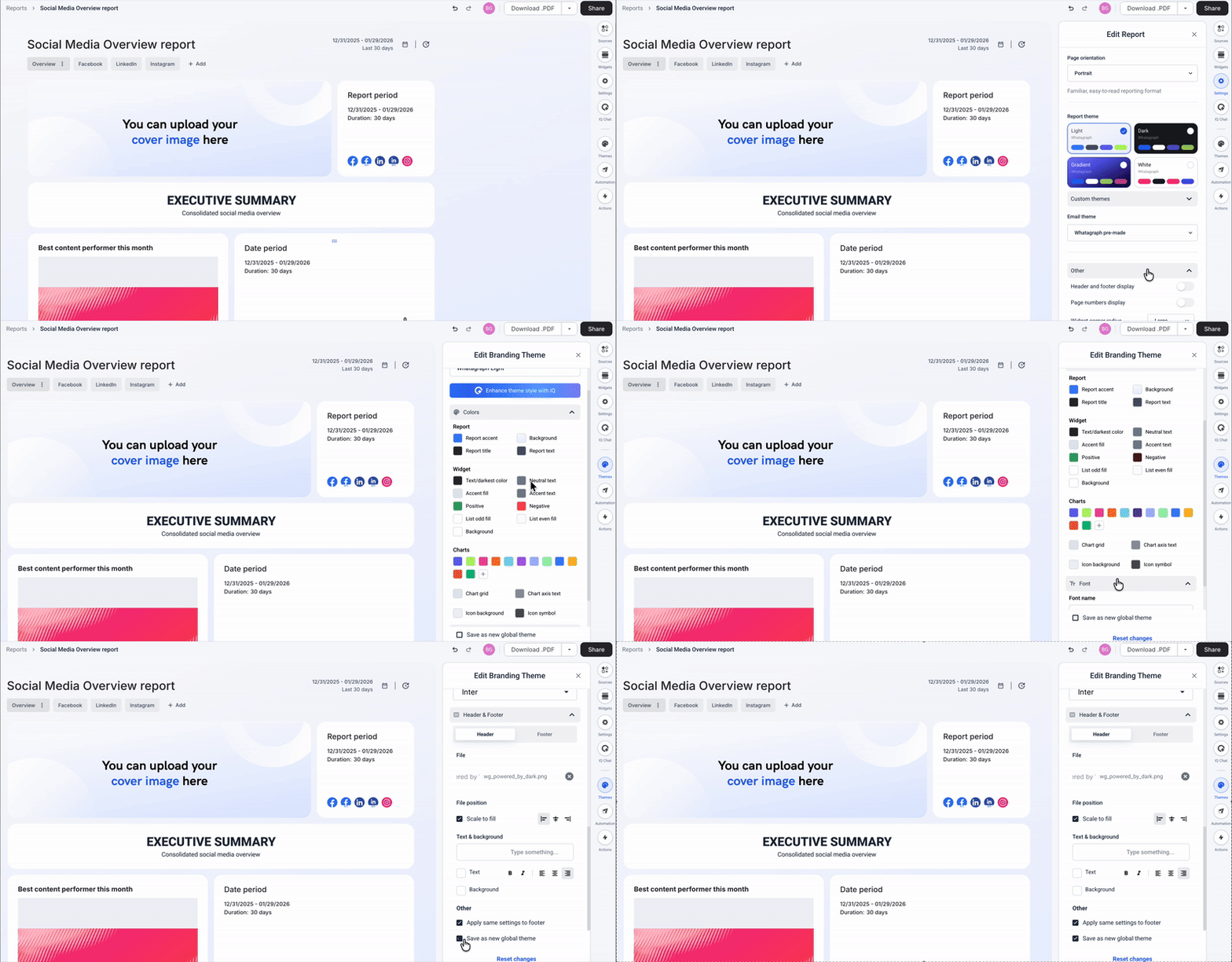
This takes 30 seconds if you know what you want.
If I don’t feel like tweaking everything by hand, I jump to Themes > Enhance theme style with IQ, upload a brand asset or pick a palette, and let Whatagraph do the heavy lifting.
Here, I upload my brand’s monogram logo variation and the report updates immediately:
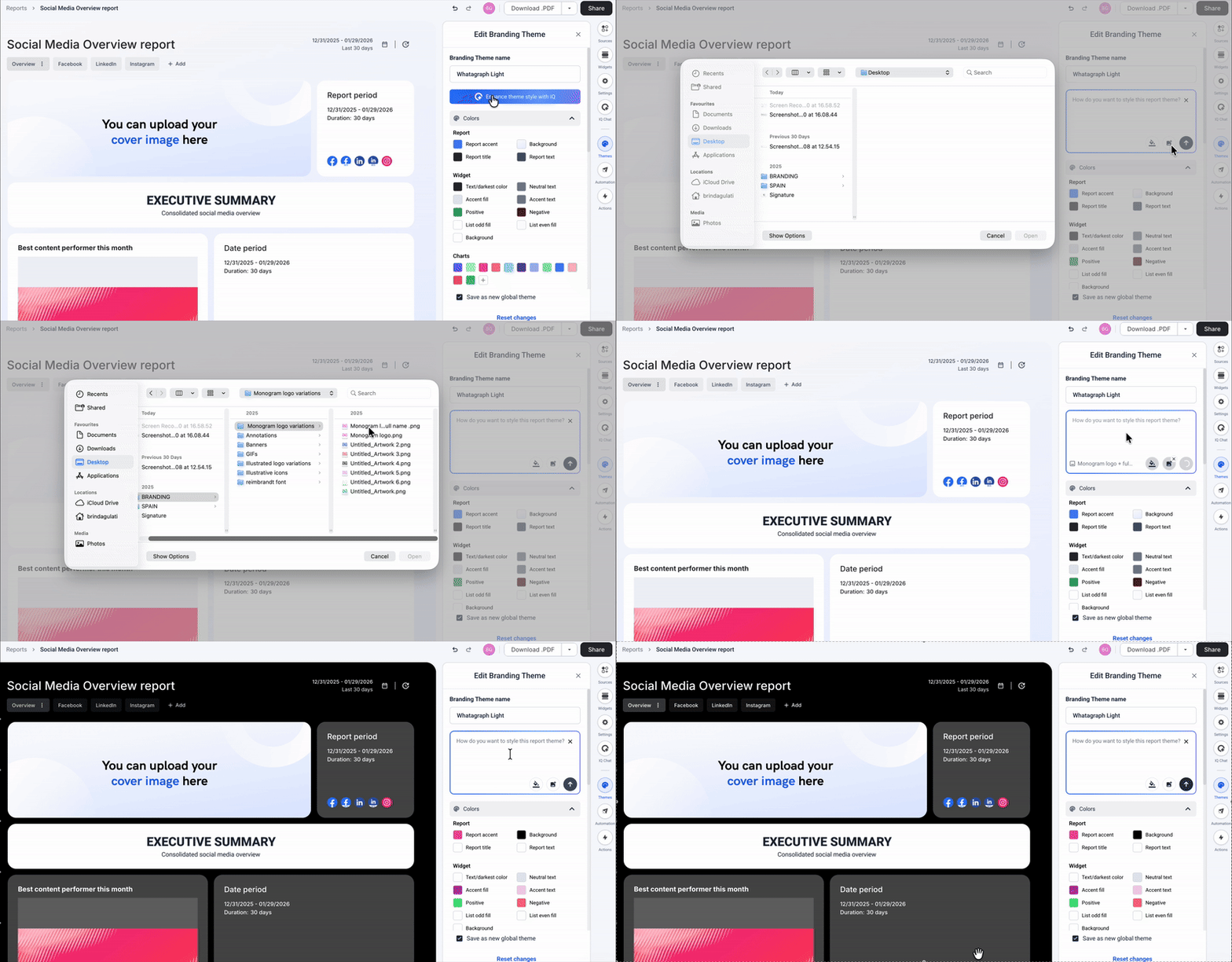
Boom, done. 15 seconds.
Plus, on Whatagraph you can:
- Add custom images (like your logo or your client’s) anywhere in the report
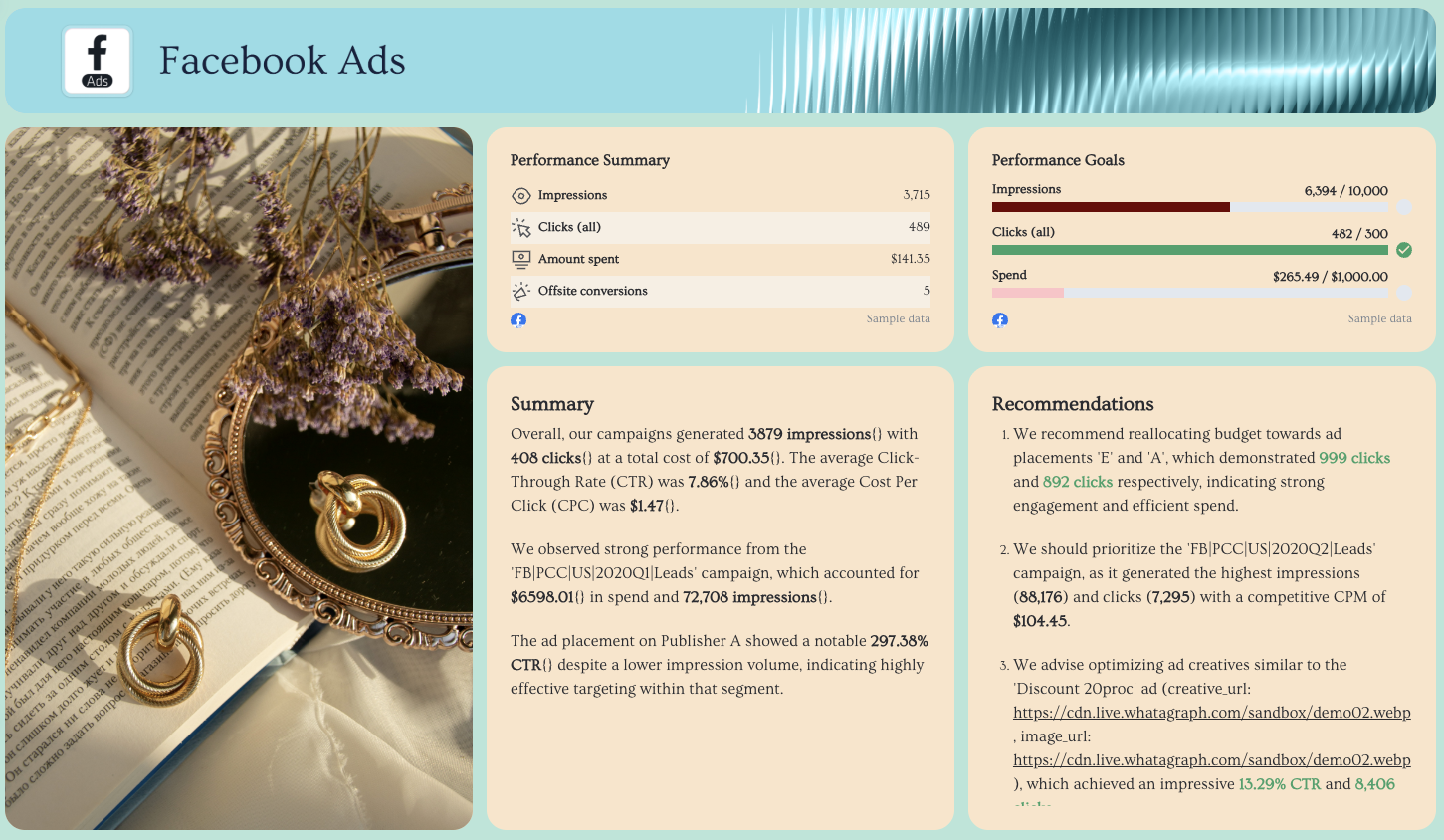
Use this white-labeled eCommerce report template for free.
- Add icons to report widgets and apply custom color themes to the icons and charts
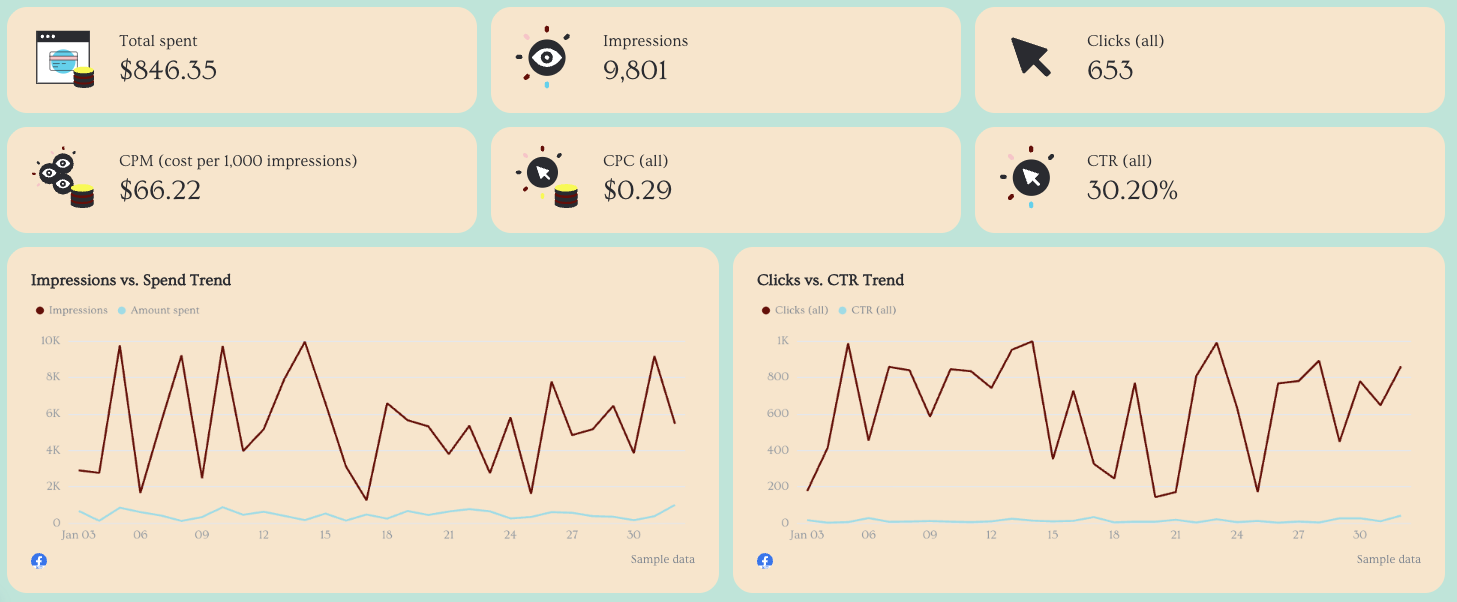
- Create multiple tabs to visualize data from multiple channels (e.g. Facebook Ads, Google Ads) – instead of having one long report
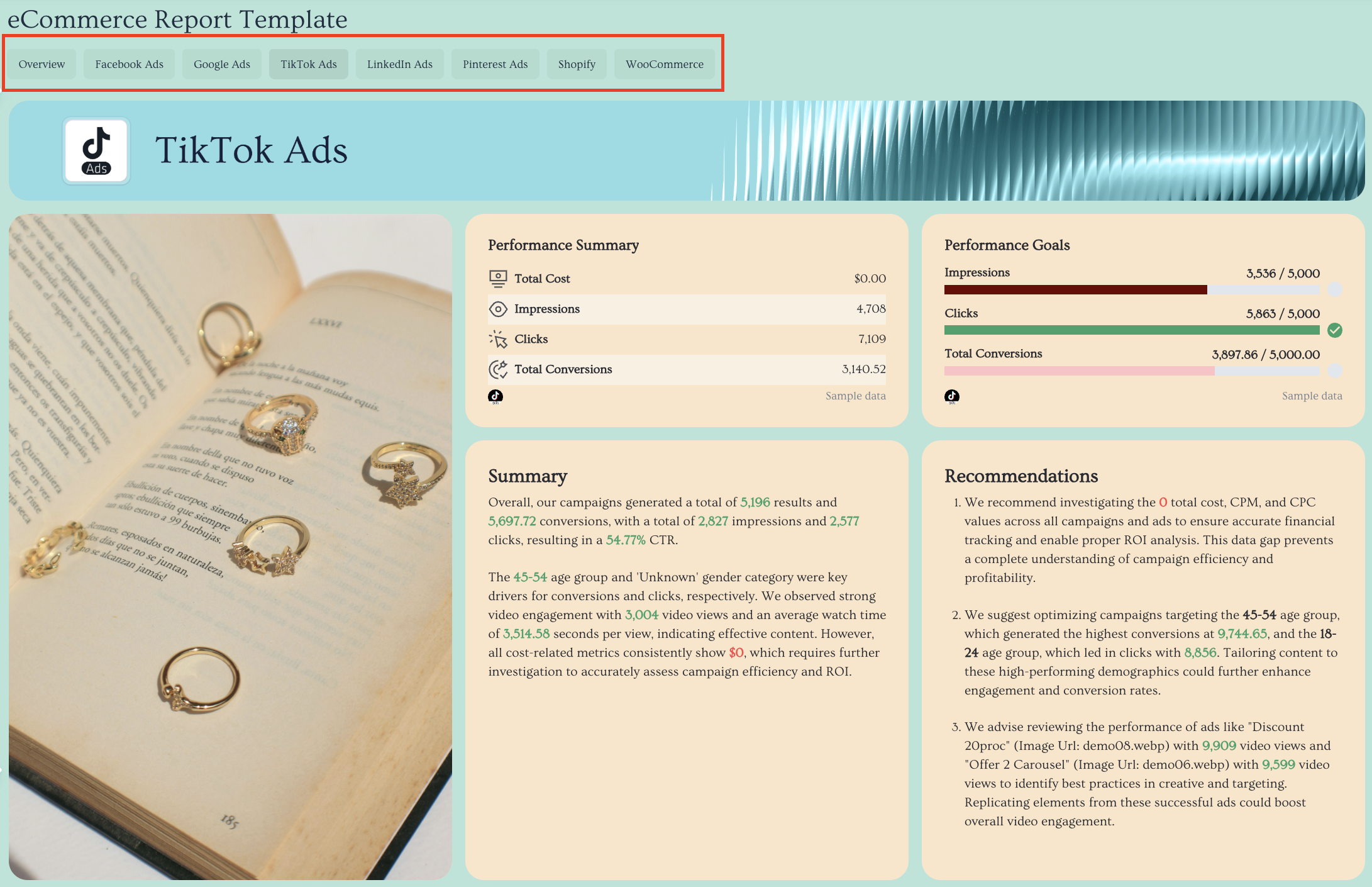
Want more white-labeled report templates? Check these out:
- White label marketing report template
- White label Facebook report template
- White label SEO report template
These white-labeled features don’t just make your report look “good” – they can actually help in retaining clients at your agency.
In fact, one of our customers, Dtch. Digitals reduced client churn by 50% after switching to Whatagraph from a legacy reporting tool, thanks to the “attractive visuals”.
Stef Oosterik, Quality Manager at Dtch. Digitals, shared:
Thanks to Whatagraph’s attractive visuals, clients can see the professionality behind our agency. It helps us get clients on board, but also to keep our clients within the agency. Our churn rate is very, very low.
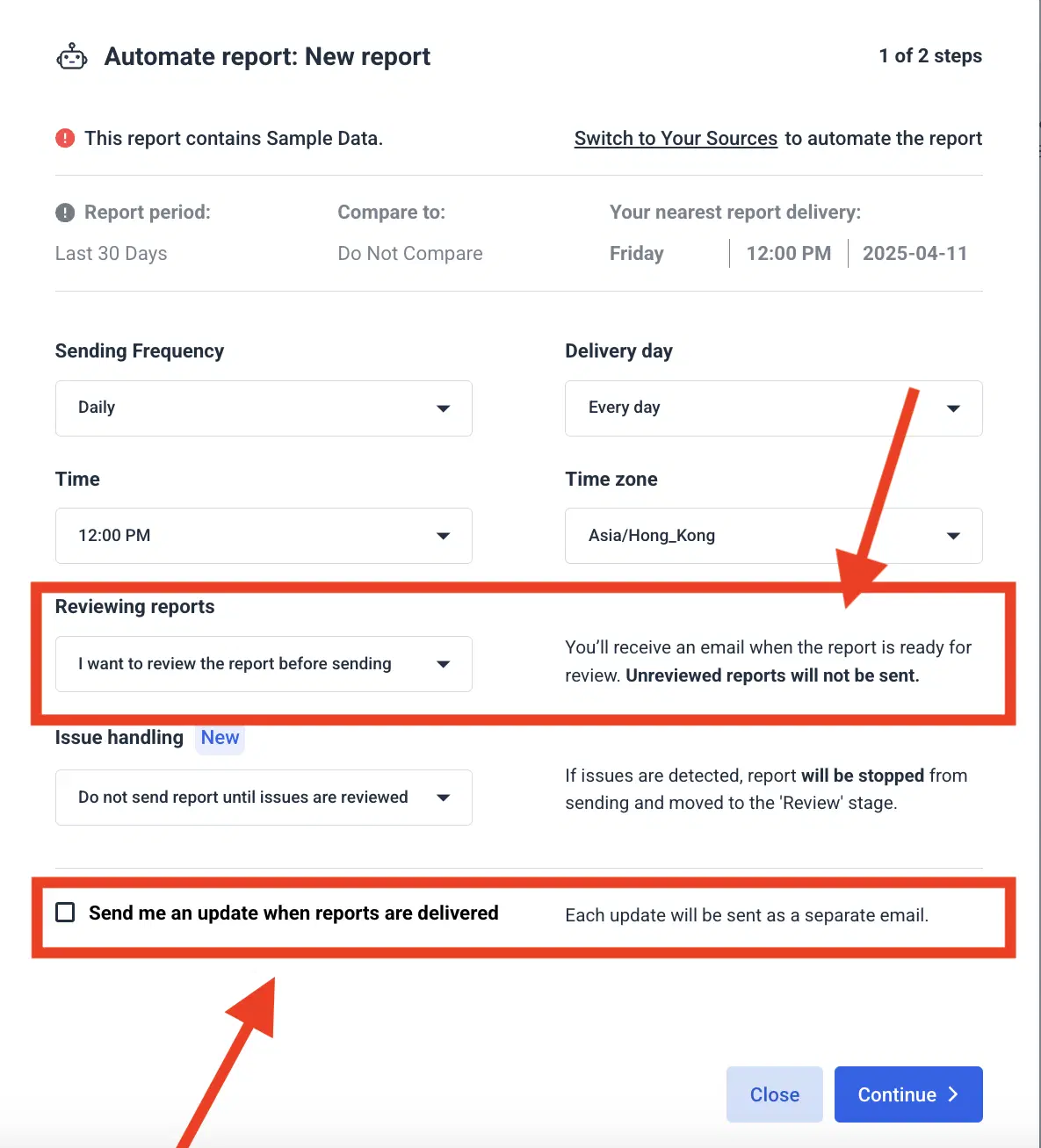
Once your reports are styled, you can automate it to go out from your white-labeled email domain on a specific date, time, and frequency. This makes your clients feel like they’re getting a report that came directly from their client rather than a third-party vendor they don’t know.
Whatagraph Pros:
- Tanja Keglić, Performance Marketing Manager at Achtzehn Grad, cut 5 hours per report after switching to Whatagraph. Coming from ReportGarden, she was used to rigid templates and workarounds, but with Whatagraph, she could fully white-label reports and structure them exactly how she wanted: “I love that on Whatagraph, I really can build and edit whatever I want and however I want the structure to be.”
- White-labeling is built into how reports are generated, styled, and delivered; the result is automated reporting that still looks intentional and client-ready.
Whatagraph Cons:
- Whatagraph covers most common channels with 55+ integrations, but teams with very niche tools may need to rely on APIs or workarounds.
- If you’re managing one or two clients and only need basic reporting, Whatagraph may feel heavier than necessary.
Whatagraph pricing:
Whatagraph's pricing scales with your needs. Check out our pricing page for the most updated information.
Start a free 14-day free trial.
2. DashThis
| Bucket | Reporting and analytics |
| Best for | Boutique marketing agencies and freelancers looking to automate reporting but that don’t need deep customization or cross-channel data workflows. |
| G2 rating | 4.7/5 ⭐ |
DashThis is a marketing reporting and analytics platform that lets you automate dashboards and client reports by pulling in data from key channels and presenting it in a single, branded interface.
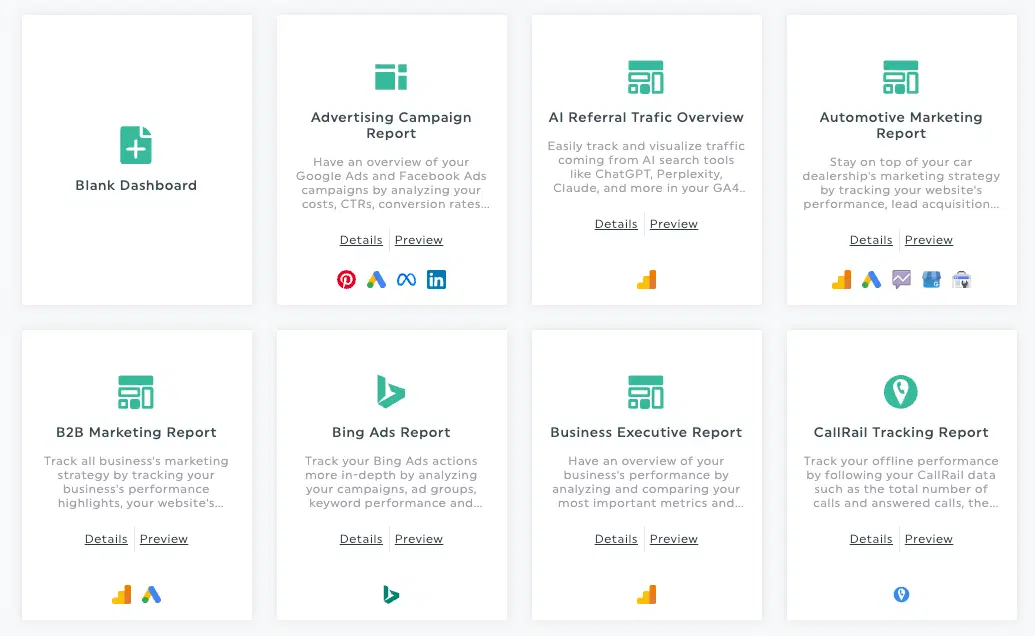
Key white-label features:
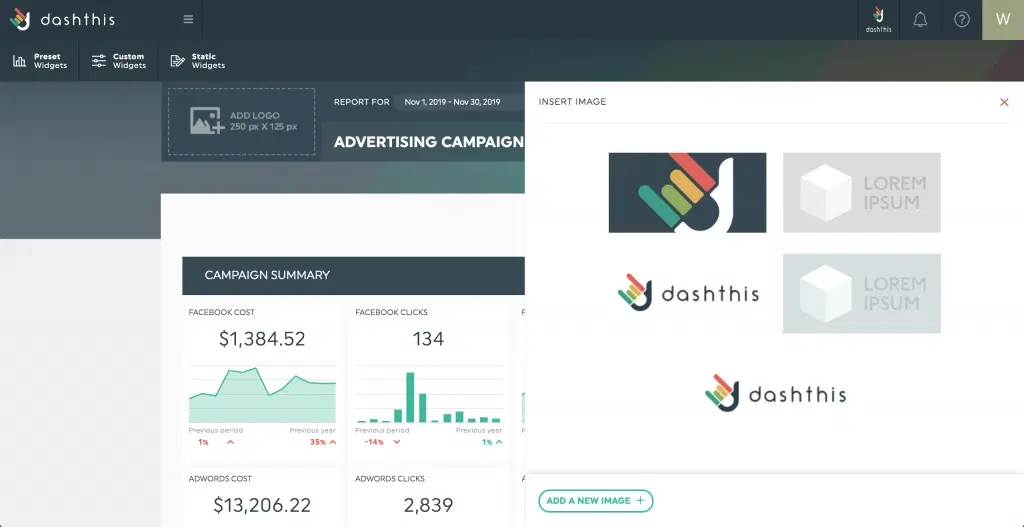
- White-label dashboards with custom domains: Replace DashThis branding entirely and share reports on your own URLs (e.g., reports.youragency.com).
- Custom logos and themes: Apply your agency’s colors, logos, and design choices so client dashboards align with your brand.
- Unlimited integrations and automated reporting: Connect to 30+ platforms (analytics, social, PPC, SEO, etc.) and automate email or live-link delivery to clients.
Pros:
- DashThis is straightforward to navigate, with a layout that’s approachable for freelancers and small teams.
- Pricing sits in a more accessible range compared to enterprise-grade reporting tools, which makes DashThis a reasonable starting point…with the tradeoff that depth and flexibility taper off as needs grow.
Cons:
- DashThis supports 29 native integrations, which is fine for entry-level reporting setups; but if you’re managing a broader stack, it doesn’t offer the same depth as more advanced platforms like Whatagraph.
- Custom themes have to be manually reapplied to each dashboard; even when you clone a dashboard or use a template, DashThis reverts to its default theme.
We’ve spent time testing DashThis. If you’re weighing it against other reporting tools, our full DashThis review gets into the juicy bits.
DashThis pricing:
DashThis uses a dashboard-based tiered pricing model, meaning the cost varies based on how many dashboards (reports) you need. Plans commonly start around $49/month for an Individual plan with up to three dashboards, and scale up to around $479/month for a Standard plan that supports roughly 50 dashboards.
3. Swydo
| Bucket | Reporting and analytics |
| Best for | Small marketing teams primarily focused on paid media reporting (Google, Meta, LinkedIn Ads) that need fast setup and PDF-based delivery, and are comfortable with limitations in data blending and branding. |
| G2 rating | 4.6/5 ⭐ |
Swydo is a reporting tool built around ad platform performance reporting, with a strong emphasis on scheduled PDF reports and quick setup for paid media teams.
Key white-label features:
- Branded reports with custom styling: Apply your brand colors, fonts, and background images to reports.
- Reusable brand templates: Create branded report templates that can be reused across clients, helping maintain consistency.
- Custom email sender and domain (with setup): Schedule reports to be sent from a custom email address and domain, reducing obvious vendor exposure in client communications.
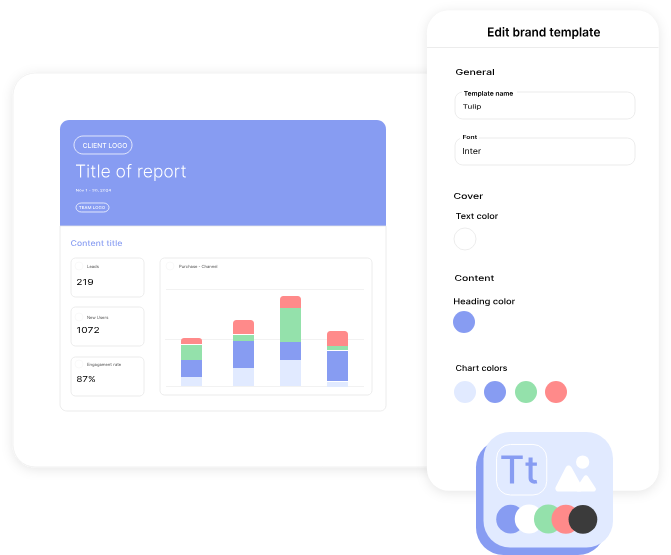
Note: Swydo gives you reasonable control over how reports look, but less flexibility over how they’re structured. The company itself notes that it “offers limited white-labeling options compared to competitors,” which largely holds up in practice.
We wrote an honest review for Swydo, too.
Pros:
- Swydo is largely easy to navigate and fast to configure, making it approachable for small teams and advertising-focused workflow.
- Swydo includes customizable report templates and scheduling tools, helping agencies scale recurring reporting.
Cons:
- While Swydo lets you set colors, fonts, backgrounds, and remove the footer logo, it doesn’t support fully responsive client portals or deeper interface customizations found in more advanced reporting platforms.
- Because pricing is based on connected data sources rather than flat tiers, costs can rise quickly for agencies with many client accounts or multi-channel setups.
Swydo pricing:
Swydo uses a data-source-based pricing model rather than traditional user or seat tiers:
- The base plan starts at around $69/month, which includes the first 10 data sources plus unlimited users, clients, dashboards, and reporting features.
- After the first 10 data sources, additional connections incur a per-source fee (e.g., ~$4.50 per source in the next tier).
4. GoHighLevel
| Bucket | CRM and business Infrastructure |
| Best for | Agencies that want an all-in-one CRM and automation platform they can white-label and scale. |
| G2 rating | 4.6/5 ⭐ |
GoHighLevel is an all-in-one CRM, marketing automation, and client management platform that combines pipelines, automation, email/SMS campaigns, funnels, calendars, and other core marketing infrastructure into a single system.
Key white-label features:
- Full platform white-label branding: Replace GoHighLevel’s branding with your own logo, colors, and domain so clients see your experience.
- Custom domain and branded login: Host the platform under a domain you control (e.g., crm.youragency.com) and give clients a smooth login experience.
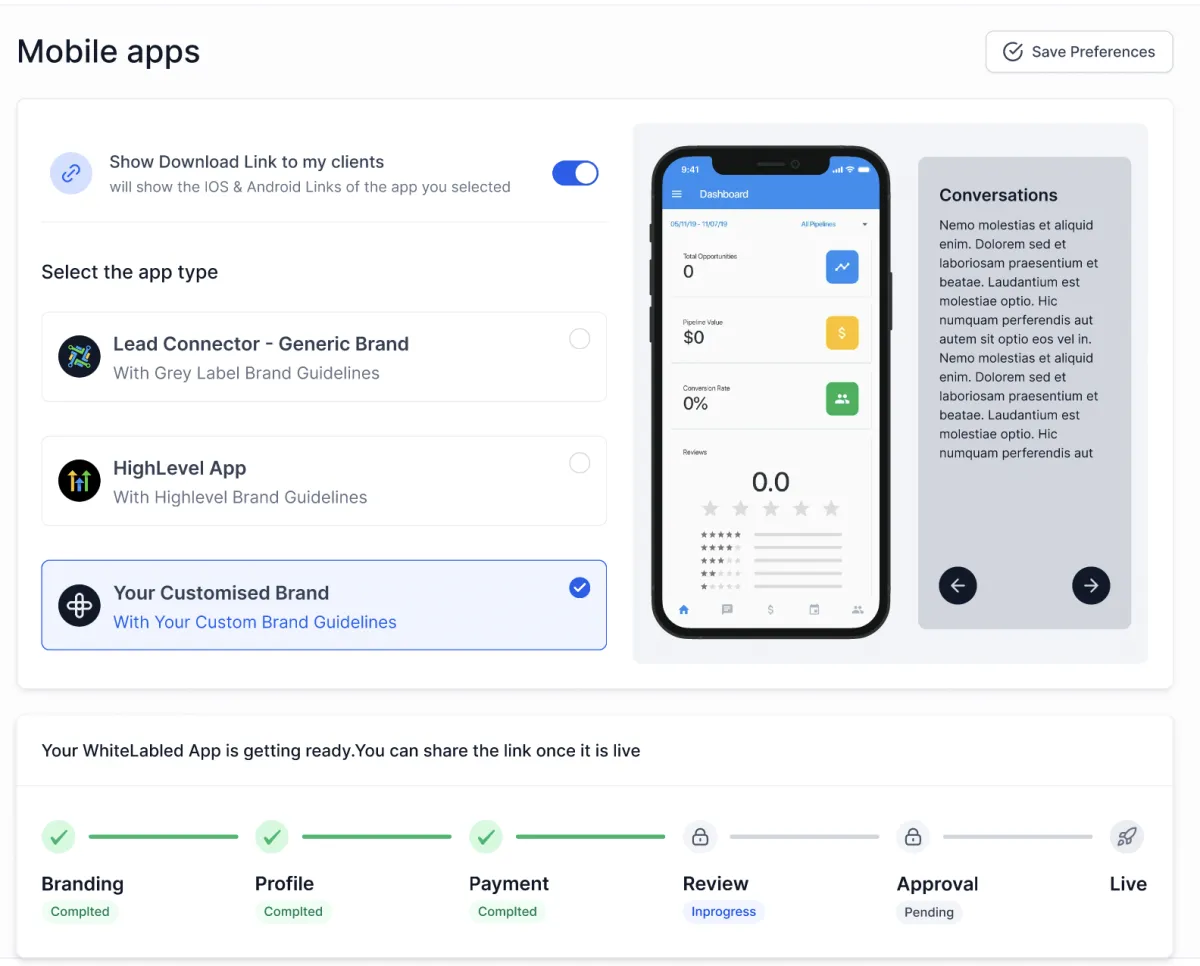
- White-label mobile app: On premium plans, agencies can customize the mobile app experience with their own branding, offering clients an app that feels like your product.
Pro tip: Looking for an easy way to report on your GoHighLevel data? Try the no-code GoHighLevel integration from Whatagraph.
Pros:
- Features like unlimited sub-accounts and tenant management support multi-client operations without needing separate accounts for every client.
- On the SaaS-capable plans, you can resell the platform as your own CRM offering and set your own pricing for end clients.
Cons:
- GoHighLevel packs a lot of capabilities, and the interface, while powerful, can feel complex or overwhelming at first.
- SMS, phone calls, and certain add-ons (like branded mobile apps or advanced features) may incur extra costs on top of the base subscription.
GoHighLevel pricing:
GoHighLevel uses a tiered subscription model with a 14-day free trial. Plans start at $97/month for the Starter plan and scale up to $497/month for the SaaS Pro plan with full white-label and reselling capabilities.
5. Vendasta
| Bucket | CRM and business Infrastructure |
| Best for | Agencies that want an expansive white-label platform they can use to resell a suite of marketing, CRM, automation, and fulfillment services under their own brand. |
| G2 rating | 4.4/5 ⭐ |
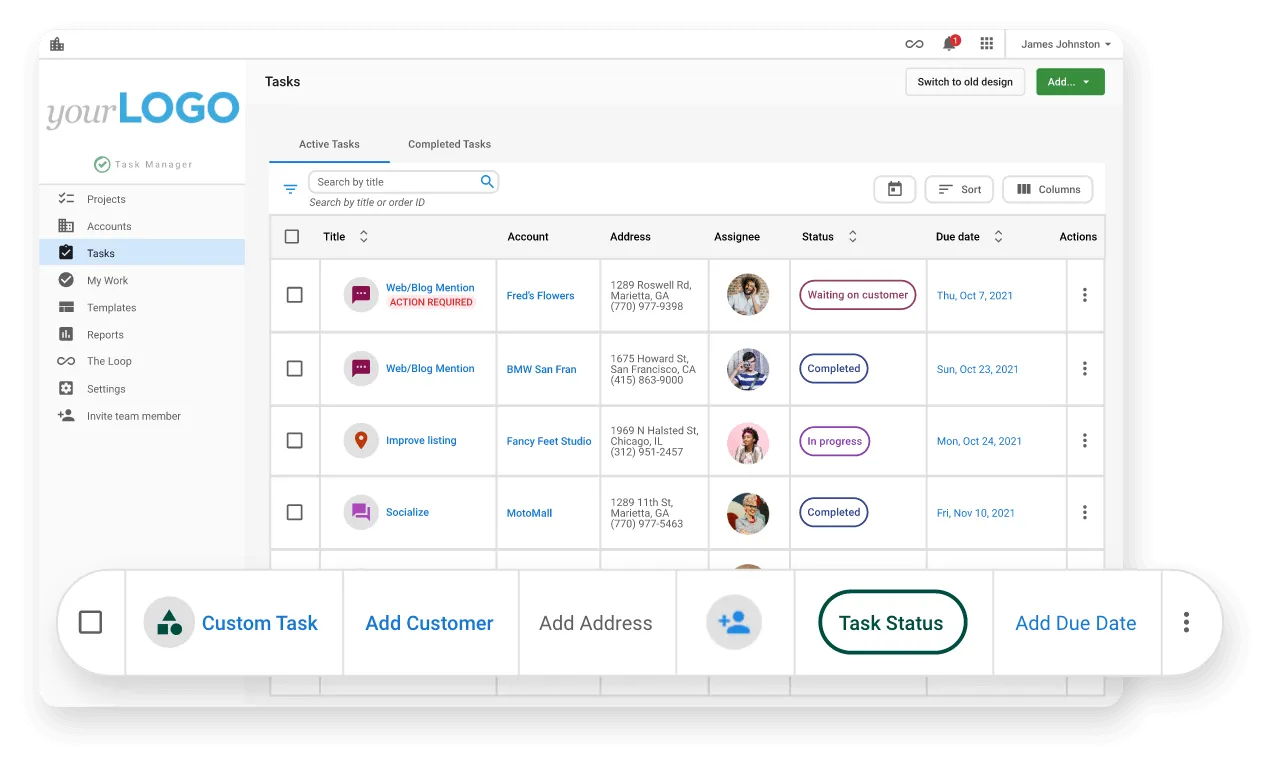
Vendasta is a white-label business and marketing platform built for agencies, consultancies, and service providers. This marketing white label solution combines CRM, sales, automation, client portals, and a large marketplace of third-party digital services that partners can brand and resell under their own name.
Key white-label features:
- White-label client portal: Vendasta’s Business App can be branded with your logo and styling so clients interact through a platform that feels like your own.
- CRM with white-labeling: Capture, nurture, and manage leads in a CRM that you can present as your agency’s solution.
- Marketplace of resellable products: Access and white-label a catalog of SEO, social marketing, reputation, and automation tools that you can offer your clients without building them yourself.
Pros:
- Most plans include unlimited client sub-accounts and users, helping agencies scale without worrying about per-seat charges.
- Access tools and services at discounted wholesale rates, creating margin opportunities when reselling to clients.
Cons:
- The platform’s breadth and marketplace model can be a lot to navigate for small agencies or solo operators.
- Not every resellable tool in the marketplace supports the same level of white-label UI/UX control.
Vendasta pricing:
Starter plans generally start around $79-$99/month, while Professional and Premium tiers can reach $399-$799+ per month, with custom enterprise options available.
6. ActiveCampaign
| Bucket | CRM and business Infrastructure |
| Best for | Agencies that sell complex lifecycle marketing and are comfortable using a partner program to brand and resell the platform. |
| G2 rating | 4.5/5 ⭐ |
ActiveCampaign is a customer experience automation platform combining CRM, email and SMS marketing, automation workflows, and analytics into a single system. You can orchestrate personalized customer journeys and manage contacts, pipelines, and behavioral campaigns from one place.
Key white-label features:
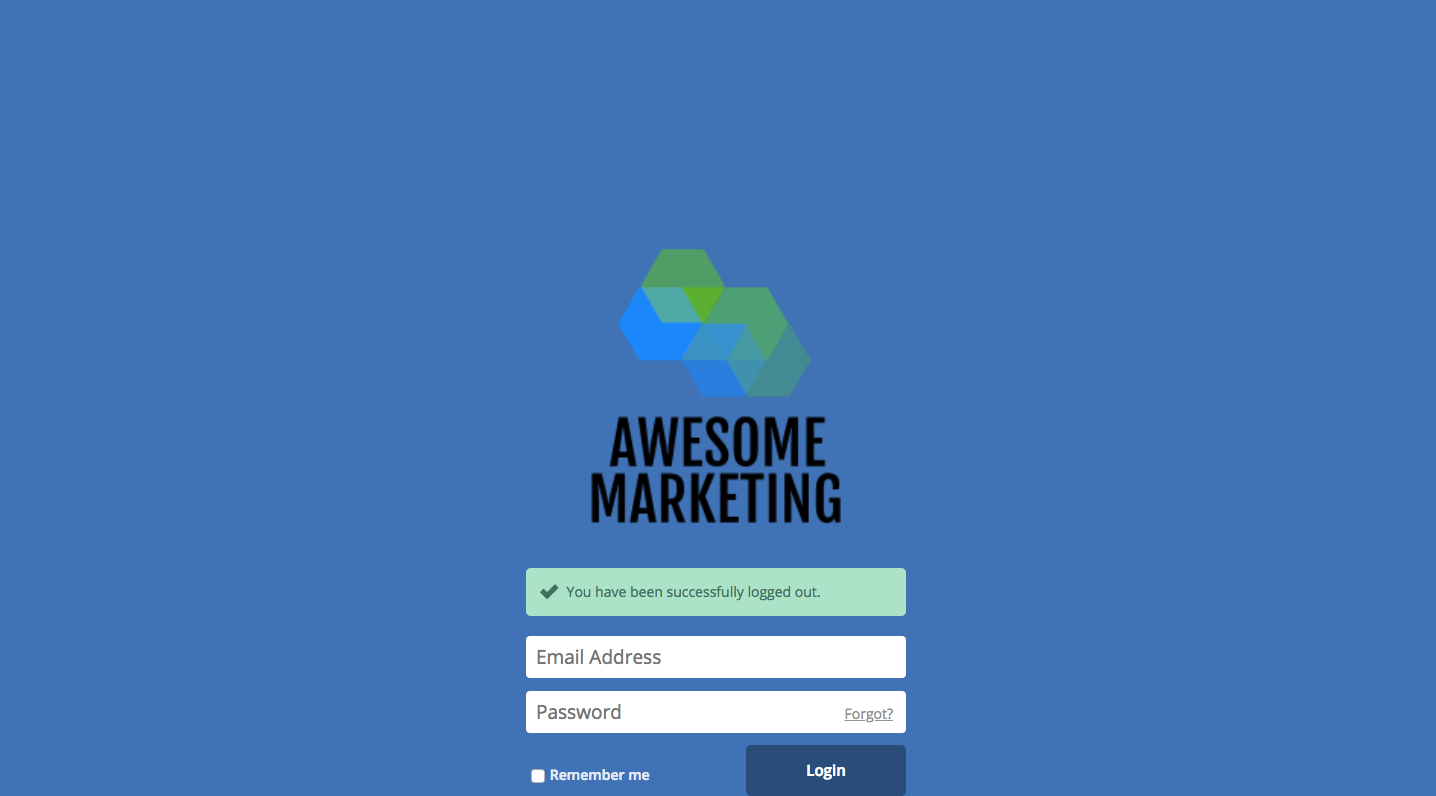
- Custom domain and account branding: On qualifying plans, you can apply your own logo and domain (e.g., app.youragency.com) and remove ActiveCampaign’s branding in client accounts.
- CRM and pipeline under your brand: Capture and nurture leads with built-in CRM, deal tracking, and task automation that integrates with automation workflows and white-label partner setups.
- White-label agency partner program: Through ActiveCampaign’s Agency Partner Program, agencies can resell and manage ActiveCampaign services under their own brand,
Pro tip: Connect ActiveCampaign to Whatagraph to blend email and SMS metrics with your CRM or ecommerce data, turning manual campaign exports into a single, AI-powered source of truth in minutes.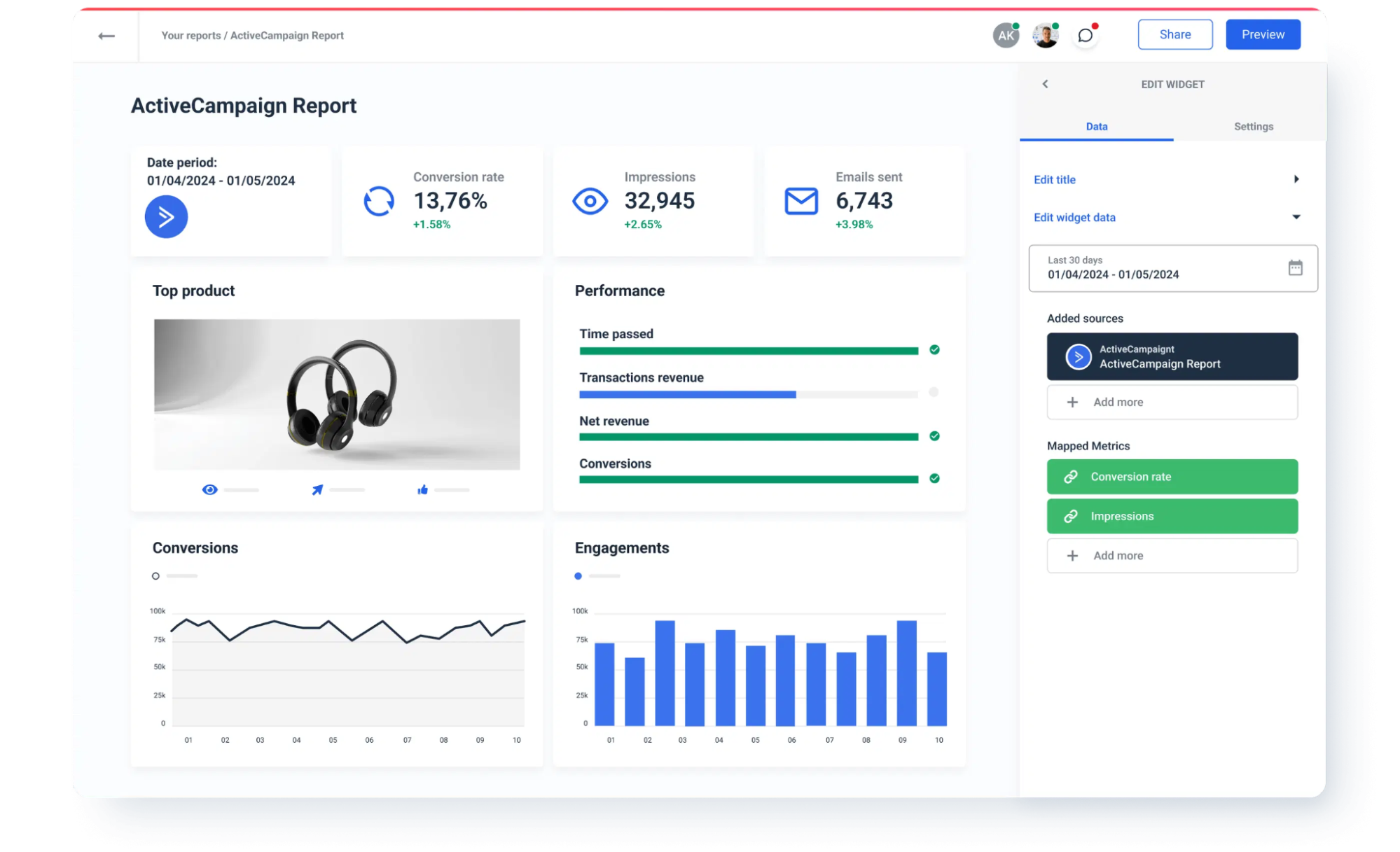
Pros:
- ActiveCampaign’s automation builder is flexible, letting you build behavior-based journeys with conditional logic, tags, and multi-channel engagement.
- Combining CRM data and automation in one platform helps agencies deliver personalized nurture flows and client campaigns.
Cons:
- Full white-label domain and branding control typically require higher-tier or enterprise-level plans, not the basic offerings.
- Pricing grows as your contact list and automation complexity scale, which can make long-term budgeting harder for agencies with large lists.
ActiveCampaign pricing:
ActiveCampaign uses a tiered subscription model based on features and contact volume, and offers a 14-day free trial. Plans typically start around $39/month for core automation.
7. SE Ranking
| Bucket | SEO and search visibility |
| Best for | Agencies that want a white-label SEO platform that combines rank tracking, technical audits, and customizable reporting. |
| G2 rating | 4.8/5 ⭐ |
SE Ranking is an all-in-one SEO and digital marketing platform trusted by agencies and in-house teams. The marketing software offers keyword rank tracking, website audits, competitive analysis, backlink monitoring, and client-ready reporting—with white-label capabilities available through its Agency Pack add-on.
Key white-label features:
- White-label platform branding: Customize the interface with your agency’s logo, colors, and domain so clients interact with your branded SEO platform.
- Custom domain and login page: Connect your own domain for client access and personalize the login experience to match your agency’s brand.
- White label reporting: Remove SE Ranking references from reports, use your agency’s branding, and schedule automated delivery from your own email domain.
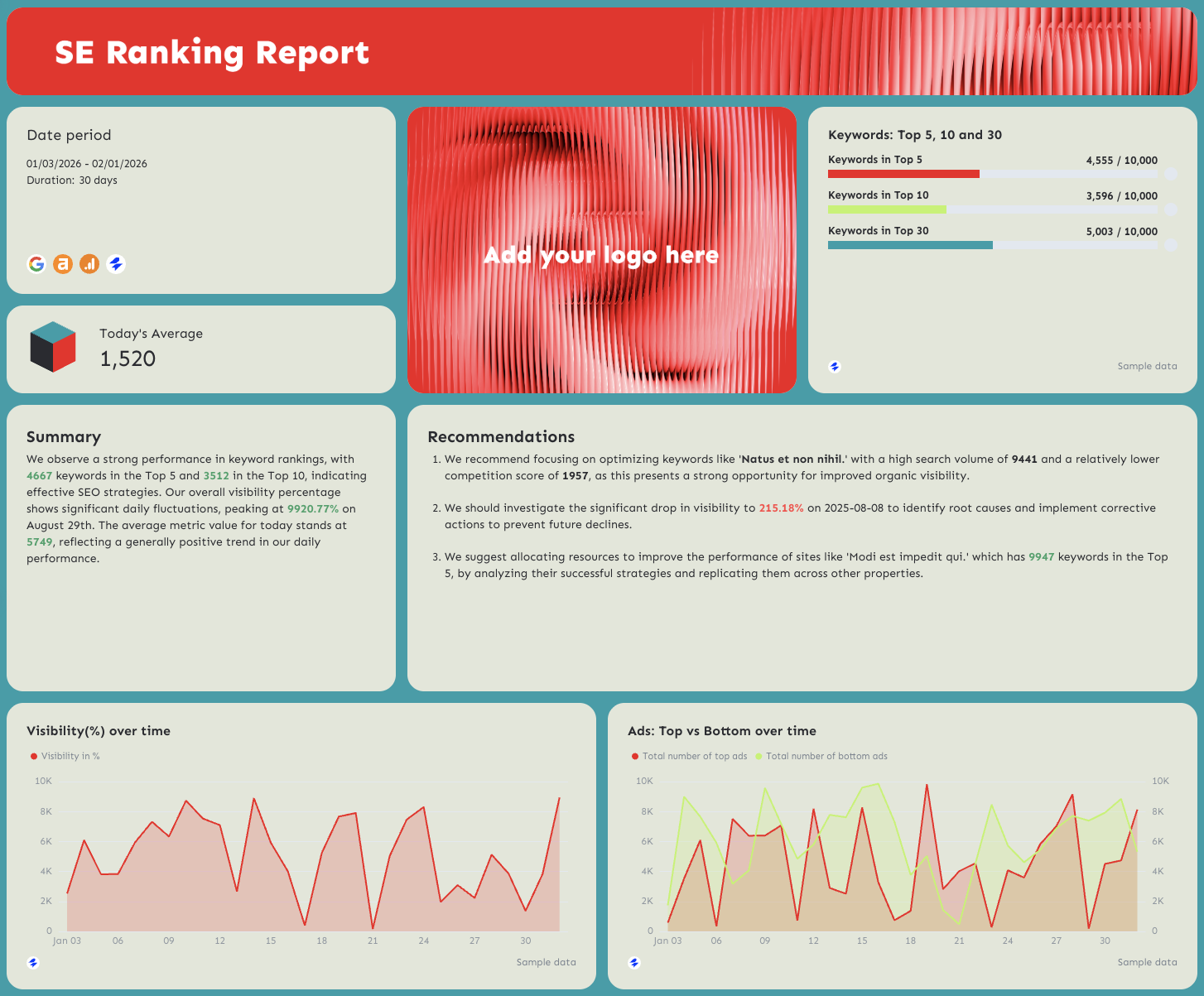
Pro tip: Connect SE Ranking directly to Whatagraph to turn SEO performance into client-ready reporting. The managed integration pulls data straight from your SE Ranking account into branded dashboards, so you can analyze visibility across Google, Bing, Google Local, and Google Mobile in one place.
Get a white labeled SE Ranking (plus other SEO channels) report in seconds with this free SEO audit report template.
Pros:
- Built-in automated reporting and white-label report generation help you deliver consistent SEO narratives to clients.
- SE Ranking handles core SEO workflows: rank tracking, site audits, backlink insights, and competitive analysis—in one place.
Cons:
- For the full white-label experience you need to purchase the Agency Pack add-on on top of a Pro or Business plan, which adds recurring cost.
- While the basics are accessible, mastering all of SE Ranking’s SEO modules (audits, backlink tools, competitive insights) can take time for teams new to all-in-one SEO platforms.
SE Ranking pricing:
SE Ranking uses a tiered plan structure with a 14-day free trial. Plans often start around $65/month on the Essential tier, with Pro plans around $119/month and Business tiers higher; adding the Agency Pack for white-label features is an additional ~$50/month on annual billing.
8. AgencyAnalytics
| Bucket | SEO and search visibility |
| Best for | Boutique marketing agencies focused primarily on SEO/PPC that don’t need deep customization or advanced data workflows. |
| G2 rating | 4.7/5 ⭐ |
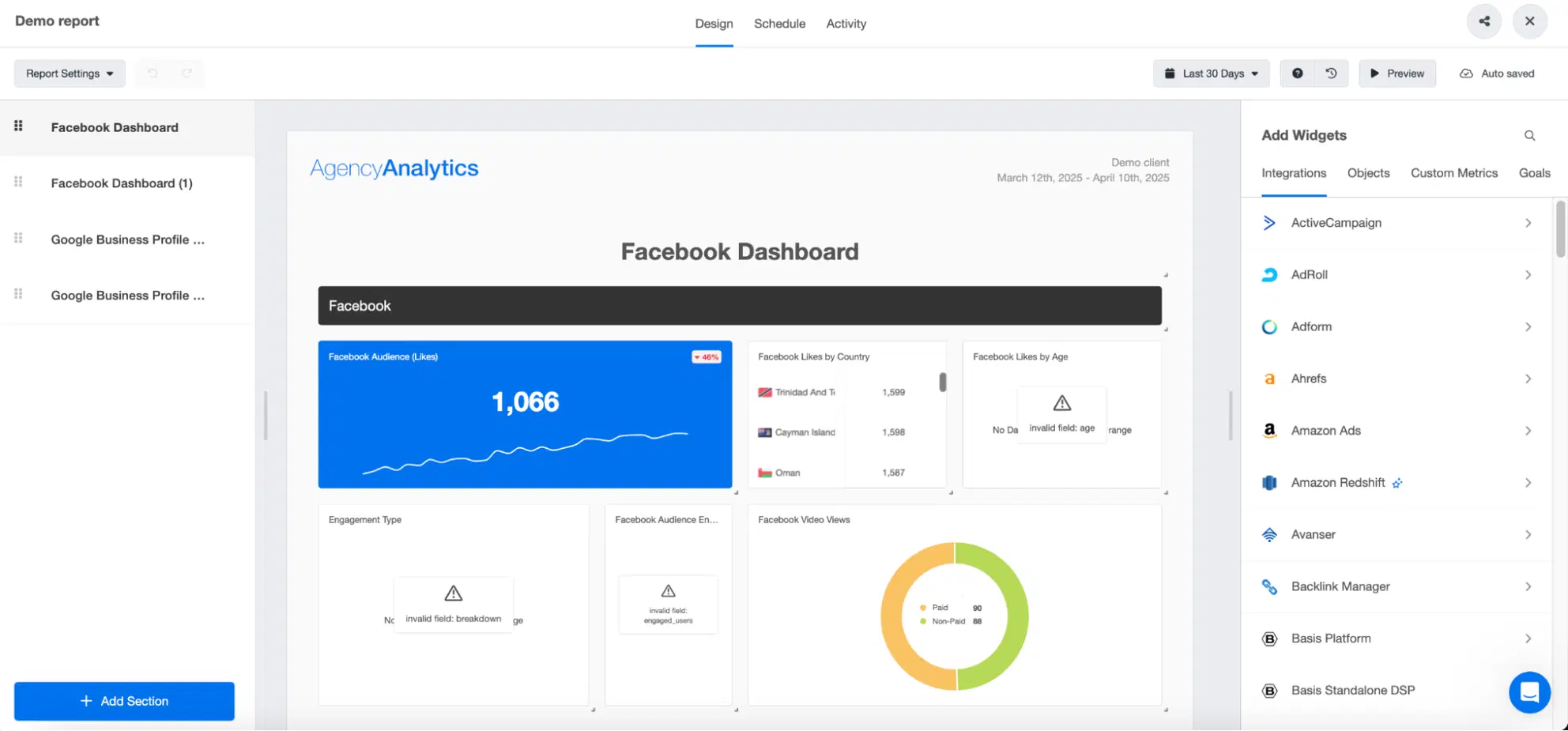
AgencyAnalytics is a white-label reporting platform built for agencies that consolidates data from SEO, PPC, social, analytics, and other marketing channels into branded dashboards and automated client reports.
Key white-label features:
- White-label dashboards and client portals: Customize dashboards with your logo and color scheme, and remove AgencyAnalytics branding.
- Custom login URL: Host your reporting portal on a domain you control (e.g., reports.youragency.com), giving clients a branded access point.
- Per-client branding controls: Change logos and colors for each account if needed, offering tailored client experiences.
Pros:
- Built-in scheduling and delivery help agencies save time on recurring reporting tasks.
- Logos, colors, and custom domains are easy to set up, making it simple to roll out branded reporting without technical work.
Cons:
- In my hands-on testing, and echoed consistently in G2 reviews, users note that while reports look polished, they don’t offer much flexibility beyond surface-level styling.
- The platform works best as a basic reporting layer; agencies needing more interactive client experiences may outgrow it.
AgencyAnalytics pricing:
AgencyAnalytics uses a client-based pricing model with a sliding scale. For example, at around five clients, pricing starts at $59/month on the Freelancer plan and goes up to $349/month on the Agency Pro plan, with costs increasing as you add more clients.
Curious how fast the pricing slider moves? Check out this guide to AgencyAnalytics pricing.
9. Semrush
| Bucket | SEO and search visibility |
| Best for | Agencies that need deep SEO, PPC, and competitive research data, with white-labeling as a reporting/export layer. |
| G2 rating | 4.5/5 ⭐ |
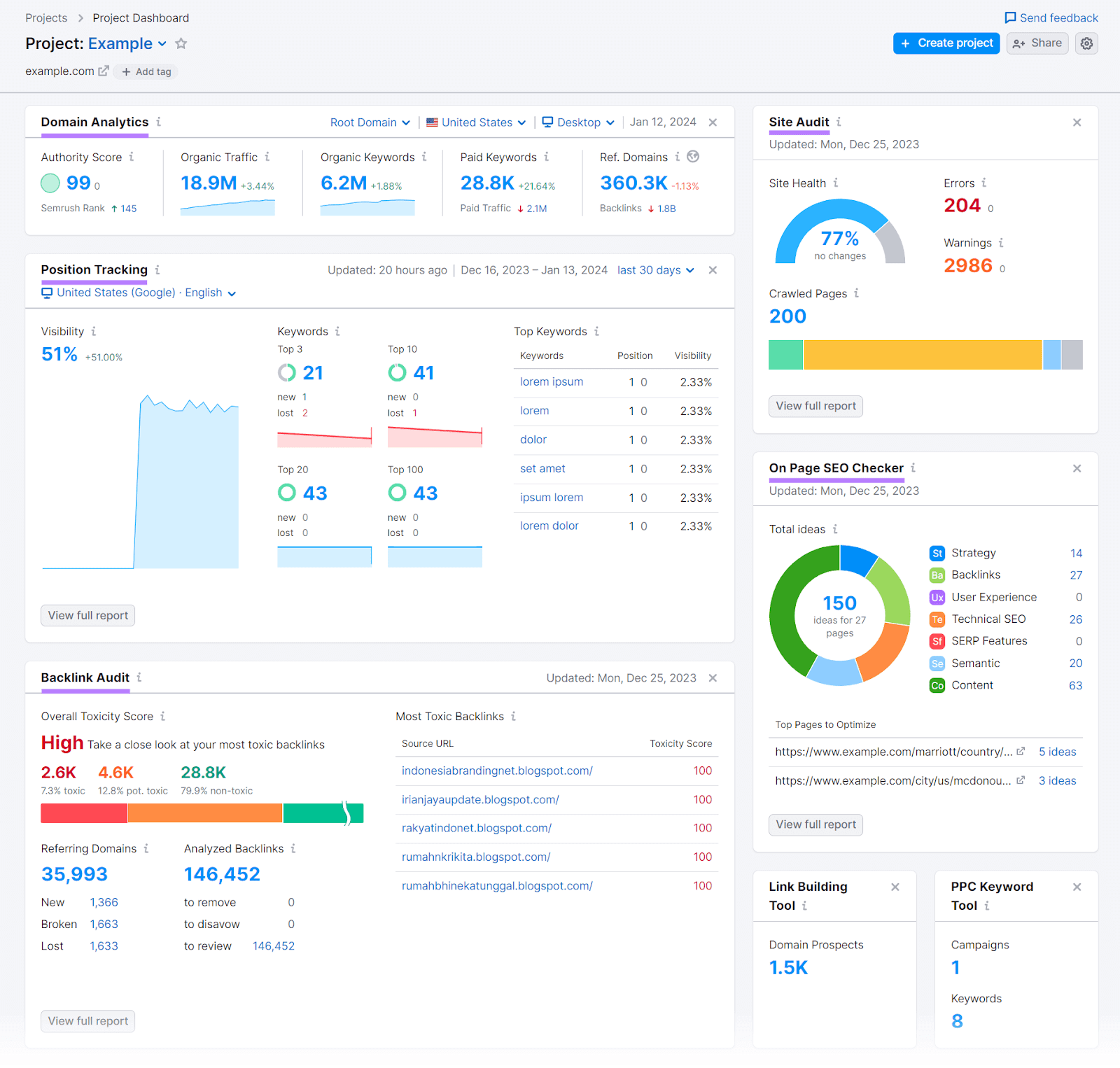
Semrush is a household name in SEO and digital marketing—its suite offers keyword research, site audits, backlink analysis, competitive intelligence, and paid search research. Semrush is often the underlying analysis engine agencies rely on, even when client-facing reporting happens elsewhere
Key white-label features:
- White-label reports: Generate branded PDF reports with your logo and styling, and remove Semrush branding on higher-tier plans.
- Agency Growth Kit: Includes white-label reporting, client portals, CRM-style lead tracking, and tools designed specifically for agencies managing multiple accounts.
- Custom report builder: Build tailored reports by selecting specific widgets and metrics relevant to each client’s SEO or PPC goals.
Pro tip: Connect Semrush directly to Whatagraph to turn SEO research into automated, client-ready reporting. The managed integration pulls data straight from Semrush into beautiful, branded dashboards.
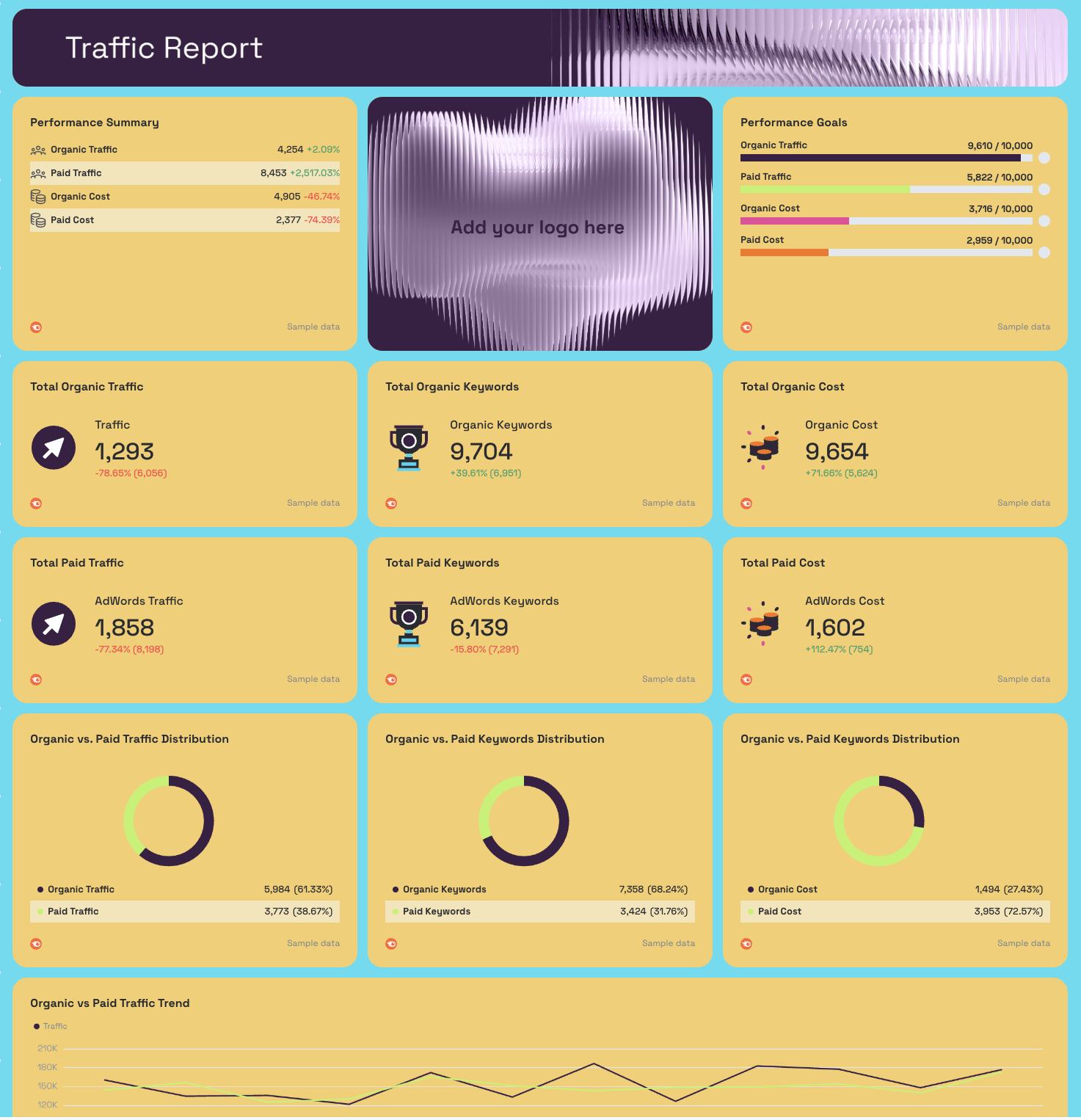
Get a white-labeled report in seconds with this free Semrush report template.
Pros:
- Semrush is all but synonymous with SEO, used by companies like IBM, Wix, and Amazon.
- Many clients already recognize Semrush metrics, which can reduce education overhead.
Cons:
- If your main goal is client-facing dashboards, Semrush alone is more analysis than delivery.
- Access to white-label reports, API usage, and agency tooling typically requires higher-tier plans.
Semrush pricing:
Semrush uses a tiered subscription model with plans that generally start at $139.95/month for the Pro plan, rise to $249.95/month for the Guru tier.
10. SocialPilot
| Bucket | Social and reputation |
| Best for | Agencies that want a budget-friendly social media management tool with white-label report delivery and basic branded dashboards. |
| G2 rating | 4.5/5 ⭐ |
SocialPilot is a social media management platform designed for agencies and teams handling multiple brands. You get scheduling, collaboration, analytics, and client reporting across major social networks.
Key white-label features:
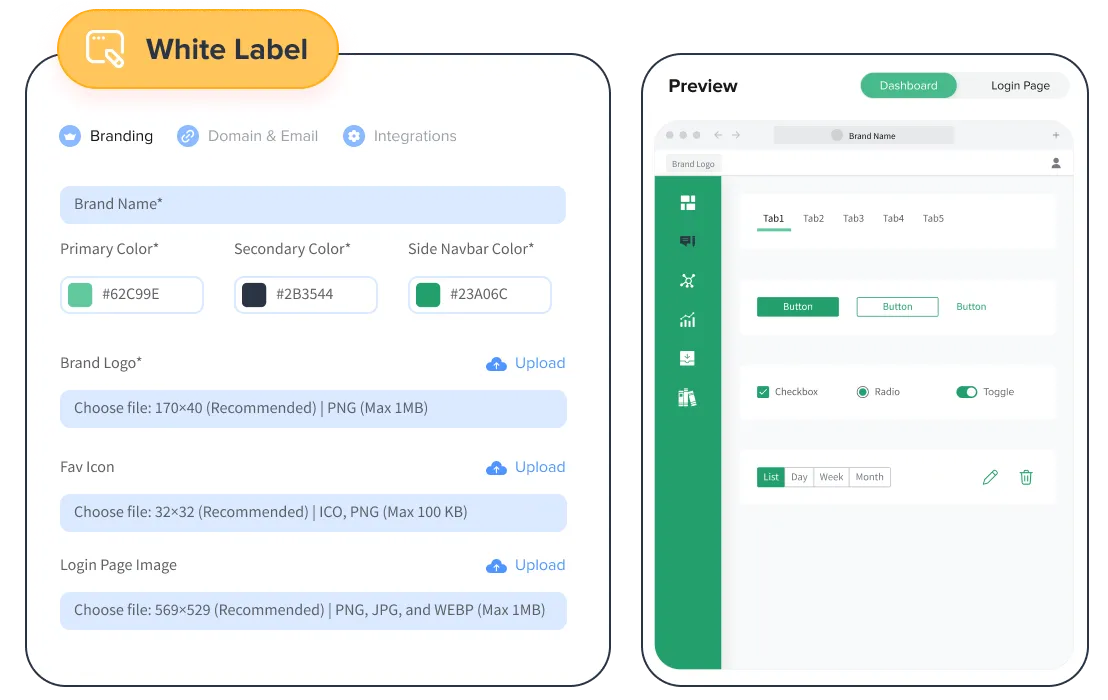
- Custom domain and branding: Upload your logo, color scheme, images, and styles so the platform and login pages reflect your agency’s identity.
- System emails from your domain: Configure system-generated notifications and emails to be sent from your agency’s domain.
- Branded login and dashboard: Customize your branded login screen and dashboard visuals so clients see your platform name and visuals.
Pros:
- Save time with the centralized scheduling and publishing workflows across platforms like Facebook, LinkedIn, Instagram, X, and others.
- Plans at the Premium level and above allow you to deliver branded social performance reports without external tools.
Cons:
- Customization options (logo, colors, domain) are fairly basic compared with tools designed primarily around white-label branding.
- Full white-labeling (custom domain, branded dashboard, system emails) typically requires the Ultimate plan or above.
SocialPilot pricing:
Plans start at around $30/month, with the Ultimate plan reaching ~$200/month, which offers full white-label capabilities.
11. Sendible
| Bucket | Social and reputation |
| Best for | Agencies that want a social media management tool with white-label dashboards, client portals, and scheduled reporting. |
| G2 rating | 4.5/5 ⭐ |
Sendible is a social media management platform built for agencies and teams, focused on scheduling, collaboration, publishing, and client reporting—including dedicated features to help agencies present a branded social management experience to clients.
Key white-label features:
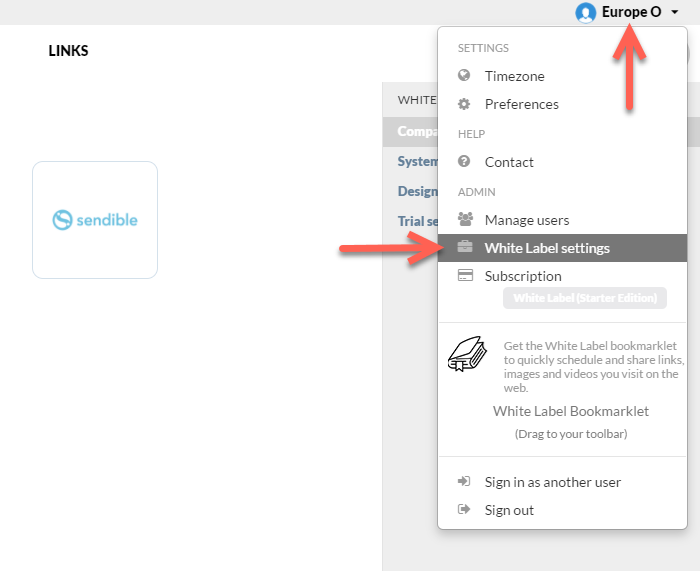
- White-label dashboard branding: Customize your dashboard with your logo, colors, and agency branding so clients see your brand identity.
- System email branding: Configure automated notifications and approvals to be sent from your own domain and email.
- Client portals and reporting: Provide clients with branded social performance dashboards and scheduled report delivery.
Pros:
- Branding options help agencies deliver a client-facing social platform without building their own tooling.
- A single workspace helps teams manage multiple brands and assign permissions.
Cons:
- Full white-label dashboards and branding are available through the White Label tier, which costs more than the base scheduling plans.
- The UI can feel older or less modern than newer social platforms.
Sendible pricing:
Plans begin at $29/month for the Creator tier and rise toward the White Label plan at ~$240/month (with higher-end options available for larger agencies).
12. BigMailer
| Bucket | Social and reputation |
| Best for | Agencies that want an affordable, contact-based email marketing platform with white-label options and strong multi-brand management. |
| G2 rating | 5/5 ⭐ |
BigMailer is an email marketing platform designed for agencies, franchises, and multi-brand teams. It supports newsletters, automation sequences, transactional email, and centralized brand management.
Key white-label features:
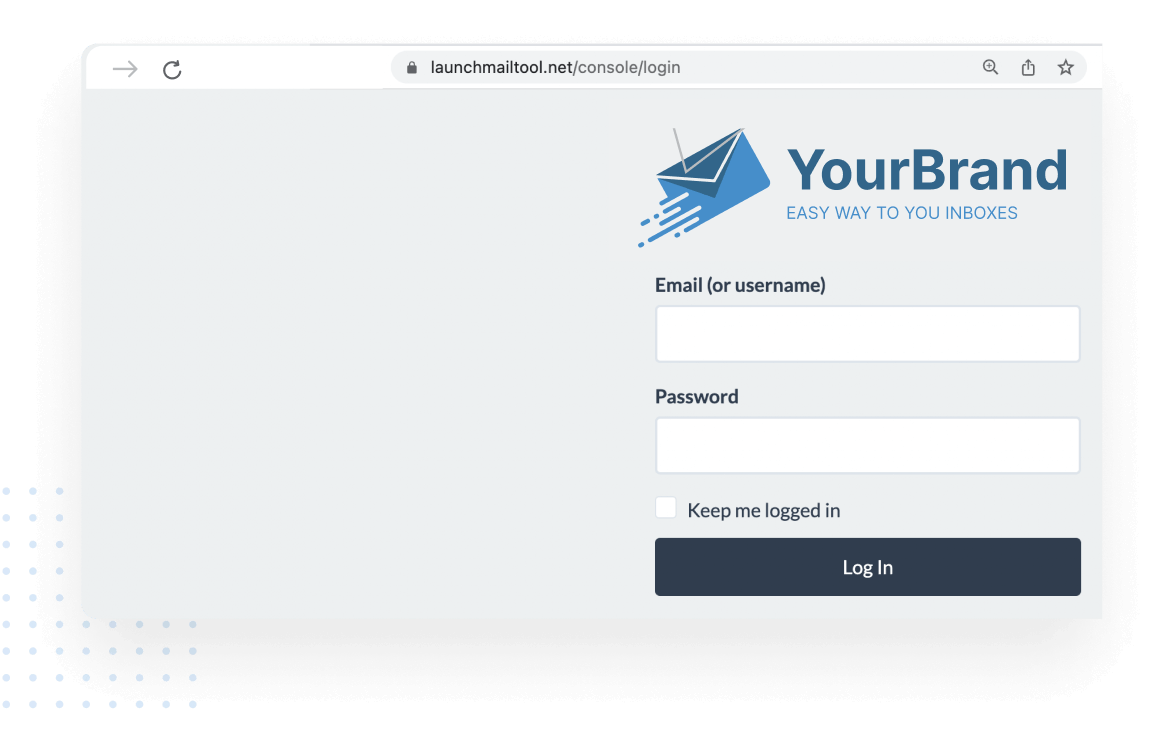
- Branded platform access: Host BigMailer on your own domain with your logo and remove all BigMailer references from login pages and activity emails.
- Custom sender domains and tracking links: Configure custom domains for link tracking and unsubscribe pages so emails and engagement paths consistently reflect your brand.
- Brandable unsubscribe pages: Customize unsubscribe and preference centers with client logos and messages, keeping the experience aligned with your agency’s branding.
Pros:
- BigMailer supports newsletters, automated marketing campaigns, RSS-to-email, and transactional messaging from the same platform.
- Unlimited brands and shared assets help agencies keep client campaigns organized.
Cons:
- While white labeling is supported via domain and logo control, deeper UI theming (e.g., full platform theme control) is limited.
- Costs rise with subscriber volume and SES usage, which means budgeting depends on list size and sending frequency.
BigMailer pricing:
BigMailer uses contact-based pricing, and you can start for free (up to 5,000 contacts). Paid plans then scale based on list size and sending volume, with simple flat pricing tied to the number of stored contacts and Amazon SES usage.
13. Mailchimp
| Bucket | Social and reputation |
| Best for | Agencies and small teams that want a well-known, all-in-one email marketing platform with white-labeling functionality. |
| G2 rating | 4.3/5 ⭐ |
Mailchimp is a long-standing email marketing and audience engagement platform used by agencies and businesses for campaign creation, audience segmentation, automation, landing pages, and performance tracking.
Key white-label features:
- Brand Kit: Upload your agency’s logo, fonts, and brand colors for use in email templates and creative assets.
- Custom domain for sending: Authenticate and verify your own domain so emails are sent from your address, not a generic provider domain.
- Custom reports: Build and export custom campaign reports that you can deliver to clients
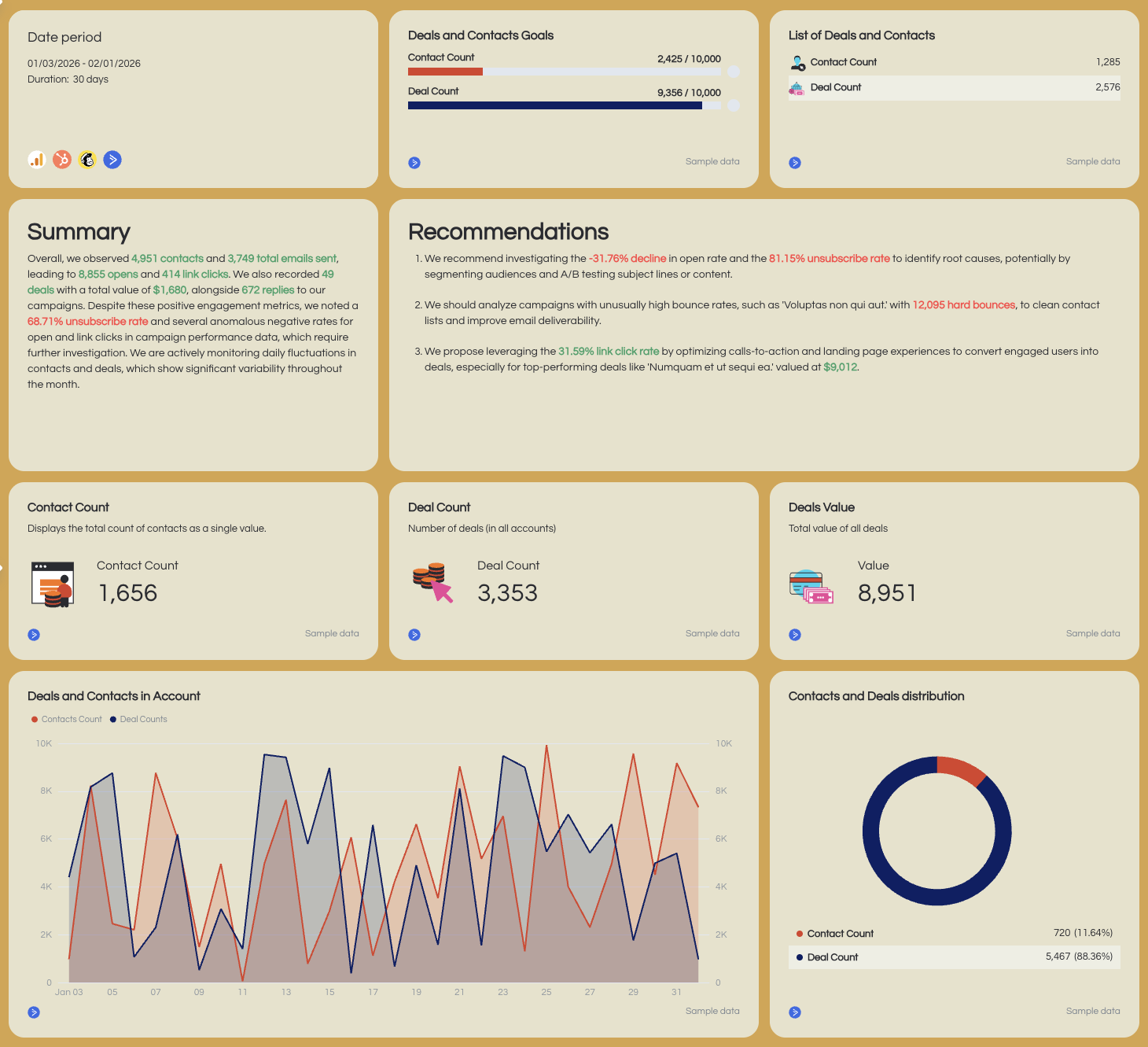
Pro tip: For agencies that want fully branded dashboards or live client portals, this typically means pairing Mailchimp with a reporting platform like Whatagraph that can pull and present Mailchimp metrics under your brand.
Get a white-labeled Mailchimp report in seconds with this free email marketing report template.
Pros:
- Supports hundreds of third-party integrations with ecommerce platforms, CRMs, and analytics tools.
- Drag-and-drop editors and built-in audience segmentation help teams move quickly from concept to launch.
Cons:
- Native white-label interface and custom client portals aren’t core parts of Mailchimp’s platform.
- Costs rise significantly as your contact list grows and as you add automation or advanced reporting needs.
Mailchimp pricing:
Plans begin with a Free plan ($0) for basic email capabilities and progress to paid tiers like Essentials (~$13/month), Standard (~$20/month), and Premium (up to ~$350+/month) for advanced automation and analytics.
14. CallRail
| Bucket | Niche service add-ons |
| Best for | Agencies that need detailed call tracking and lead intelligence as part of a broader analytics stack. |
| G2 rating | 4.5/5 ⭐ |
CallRail is a call tracking and lead intelligence platform that tracks phone calls, texts, and form interactions to help agencies connect conversation-level insights back to marketing channels and campaign performance.
Key white-label features:
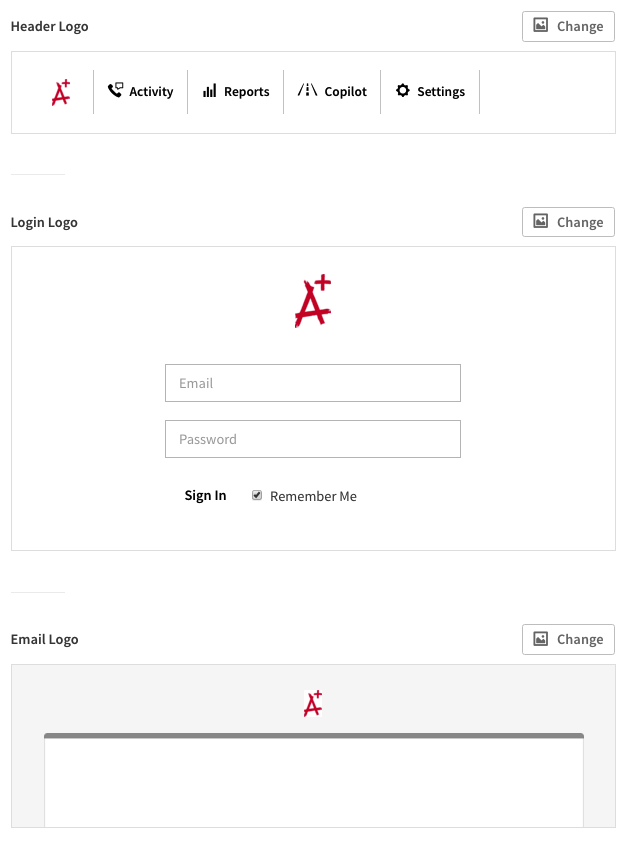
- Branded reporting dashboards: CallRail lets you remove CallRail branding and replace it with your own logo and colors.
- Custom domain with SSL: Agencies can set up a custom subdomain (e.g., calls.youragency.com) for client access.
- Branded email notifications: White labeling extends to system emails and notifications so alerts and reports appear to come from your agency’s identity rather than a third-party tool.
Pro tip: Connect CallRail to Whatagraph to keep call tracking performance visible alongside your other marketing KPIs. The integration pulls caller data, source attribution, phone numbers, and call activity into a single dashboard.
Pros:
- CallRail connects with Google Analytics, Google Ads, CRMs, and more.
- CallRail tracks calls, texts, and form submissions and ties them back to marketing sources, helping demonstrate ROI.
Cons:
- Full branding (custom domains, dashboard logos, branded emails) must be enabled separately.
- CallRail excels at call and lead tracking, but agencies needing deeper data blending or multi-channel dashboards will likely pair it with other tools.
CallRail pricing:
Plans commonly start around $45/month for basic call tracking, with higher tiers (e.g., Conversation Intelligence or Call Tracking Complete) scaling up toward $135+/month depending on features and usage.
15. BidsCube
| Bucket | Niche service add-ons |
| Best for | Agencies and media buyers that want to build and run their own brandable programmatic advertising platform (DSP, SSP, or AdExchange). |
| G2 rating | 4.5/5 ⭐ |
BidsCube is a white-label programmatic technology provider that lets agencies, publishers, and ad businesses launch their own real-time bidding platforms, ad exchanges, or demand-side platforms (DSPs) under their own brand.
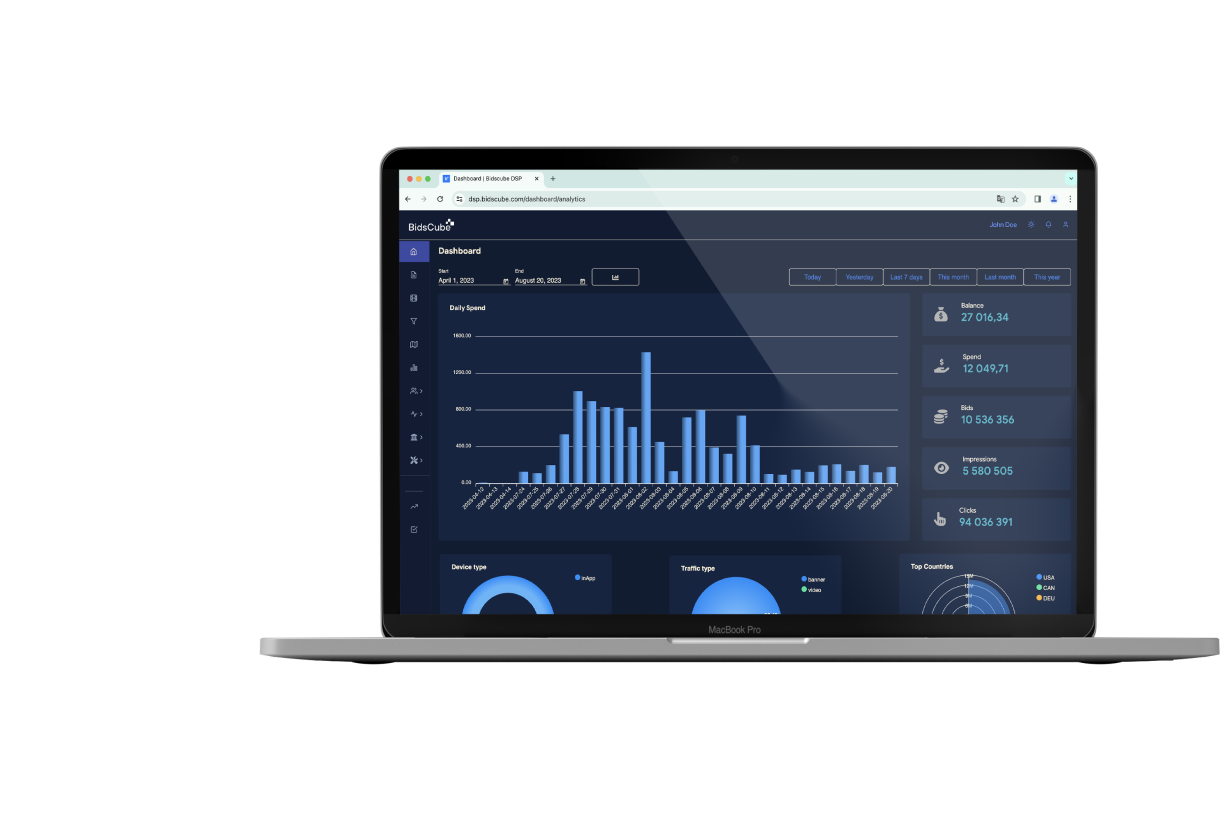
Key white-label features:
- White-label DSP and AdExchange platforms: Build your own branded programmatic buying infrastructure, from a DSP targeting inventory to an AdExchange that handles real-time bidding on impressions.
- Customizable dashboards and workflows: Recent updates let partners tailor dashboard layouts, swap modules, and surface the metrics most relevant to their business or clients.
- Programmatic control: Agencies can manage bidding logic, traffic pacing, floor pricing, and partner connections in an OpenRTB-compliant environment.
Pros:
- BidsCube lets agencies host and brand their own programmatic stack, which can become a proprietary service offering.
- Fast onboarding and attentive support are differentiators that help teams adopt the platform quickly.
Cons:
- While setup isn’t overly complex, meaningful use of the platform’s programmatic features benefits from in-house AdOps or developer support.
- Because the product is essentially a full programmatic platform stack, it’s not as immediately accessible as typical SaaS reporting or social tools.
BidsCube pricing:
BidsCube’s white-label programmatic solutions vary by deployment and capability, but entry options (e.g., white-label Ad Server/DSP) can start around $300/month for basic setups.
Published on Jul 22 2024
WRITTEN BY
Nikola GemesNikola is a content marketer at Whatagraph with extensive writing experience in SaaS and tech niches. With a background in content management apps and composable architectures, it's his job to educate readers about the latest developments in the world of marketing data, data warehousing, headless architectures, and federated content platforms.