





What To Include in a Real Estate Marketing Report Template
Based on real estate marketing reports created by marketers on Whatagraph, these are the core sections you should include to report performance in a way brokers, developers, and other real estate professionals actually understand.
The goal is to connect digital marketing activity to lead generation, appointments, and real estate sales, without drowning clients in generic metrics.
1. Real Estate Marketing Summary
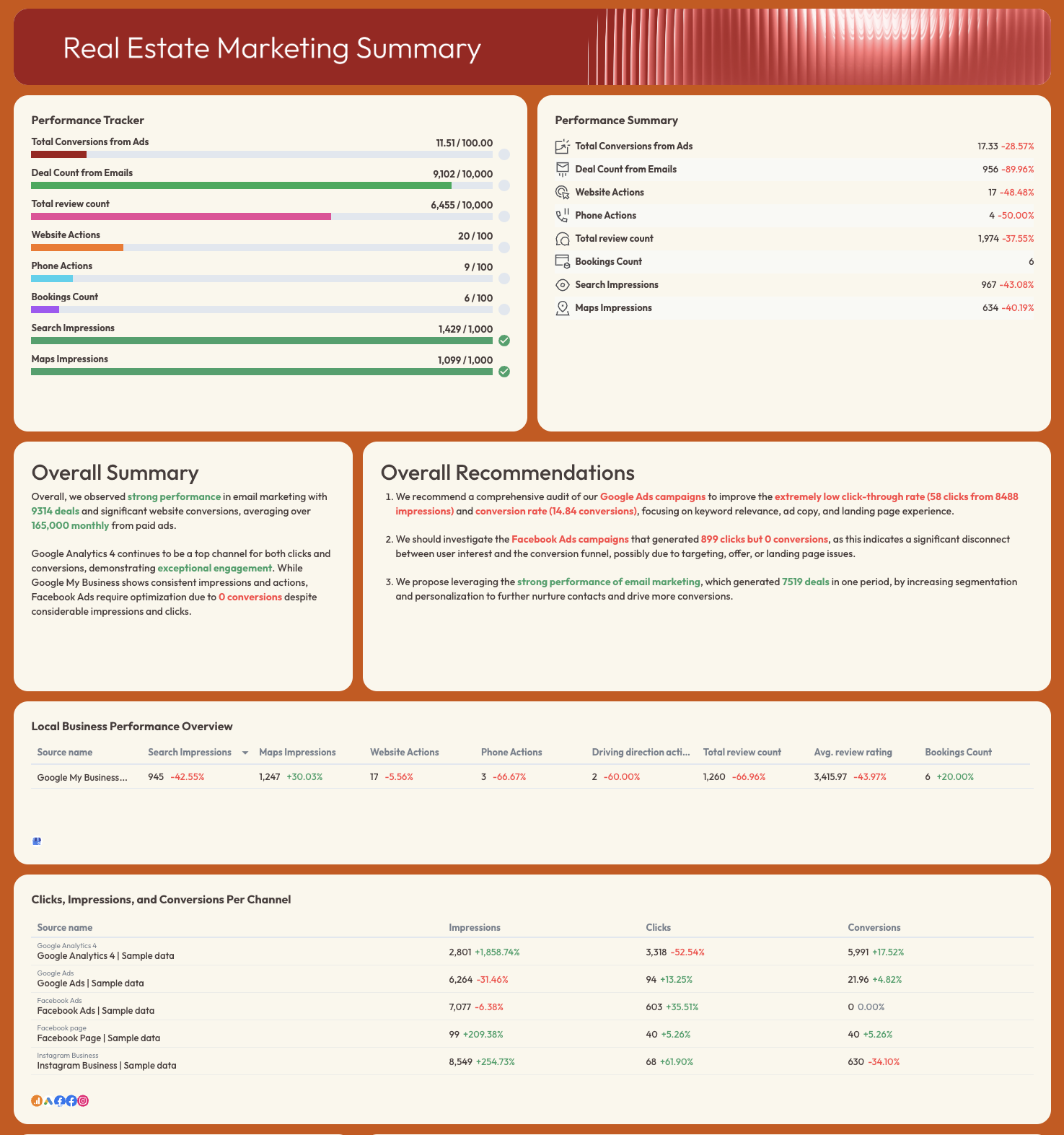
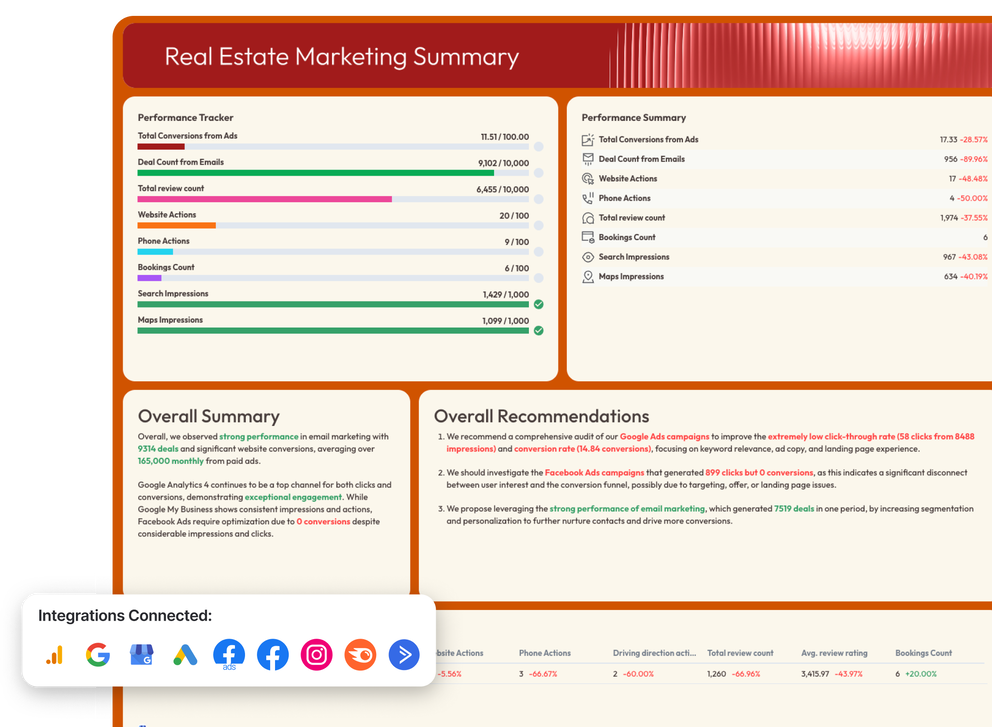
This is the first page of the report and the most important one. It gives stakeholders a clear, high-level view of performance before they scroll into channel details, helping them quickly assess whether marketing efforts are supporting the broader business plan and marketing strategy.
What to include:
- Impressions, conversions, and actions across all marketing channels
- 12-month trend charts for:
- Search impressions and map impressions
- Website actions, phone actions and driving directions
- Contacts and deal counts
- Monthly ad spend vs. leads and form submissions
- Organic social follower growth over time
- Performance summary for each trend chart
- Overall performance summary with actionable insights and next steps
This section helps agencies show value fast and keeps reporting focused on outcomes—not vanity stats.
2. Google My Business
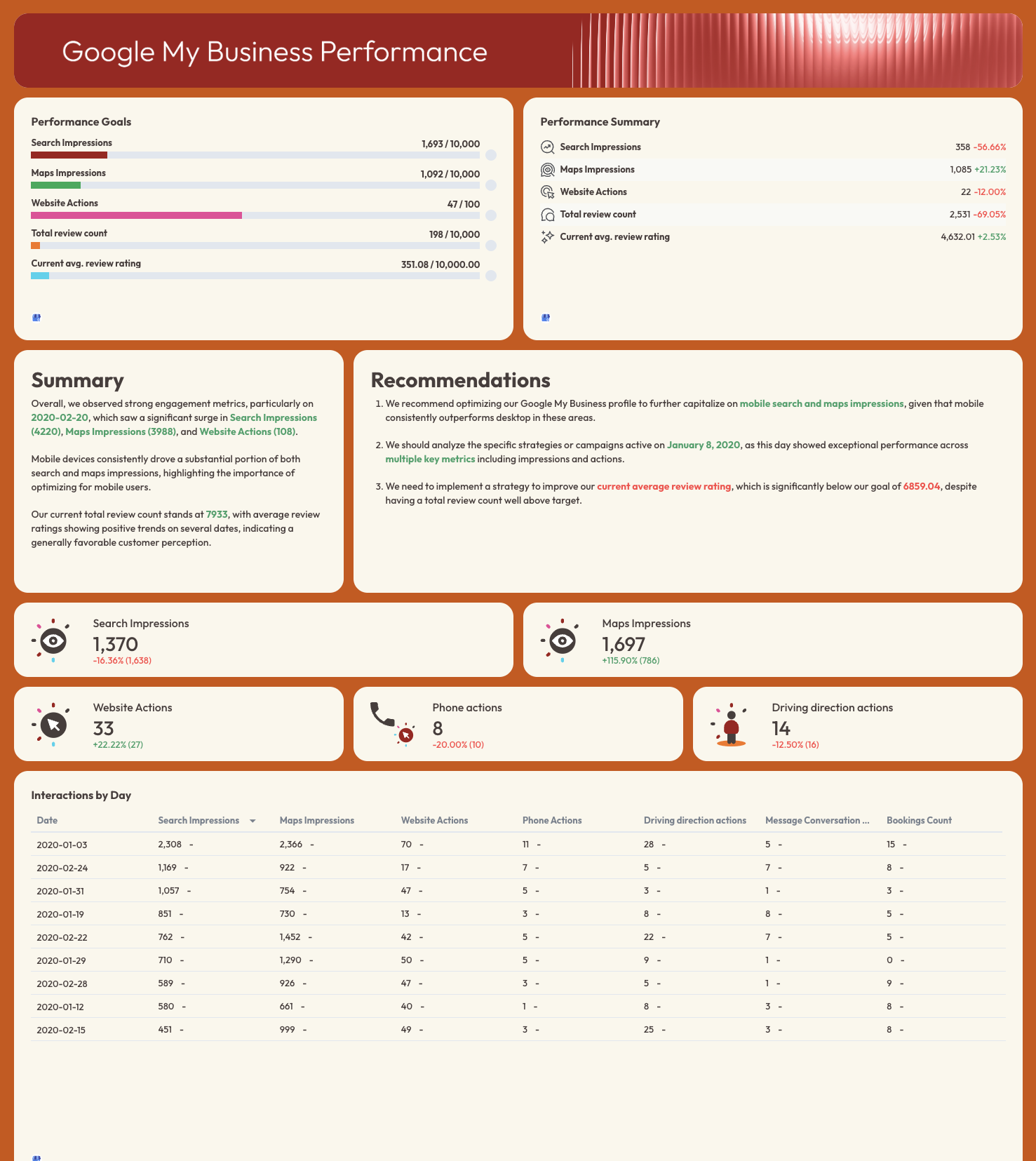
Google My Business (now Google Business Profile) is critical for local visibility in the real estate industry, especially for brokerages and agents competing in a specific local market.
What to include:
- Search and map impressions
- Website visits, phone calls, and direction requests
- Month-over-month and year-over-year trend graphs
- Actions taken by potential home buyers
- Comparison charts showing growth over time
These metrics help explain how local discovery supports property marketing, open houses, and inbound lead generation.
3. SEO

SEO shows how well your client’s / your real estate website captures demand from buyers and sellers actively searching. This section ties organic traffic to listing visibility and long-term growth.
What to include:
- SEO KPIs like organic sessions and users
- Traffic to key pages (listing pages, neighborhood pages, blog content)
- Form submissions and click-to-call events
- Keyword visibility tied to the real estate listing and service areas
- Trend charts showing organic growth alongside market trends
For agencies, this helps position SEO as a long-term lead generation channel, not just traffic.
4. Google Ads
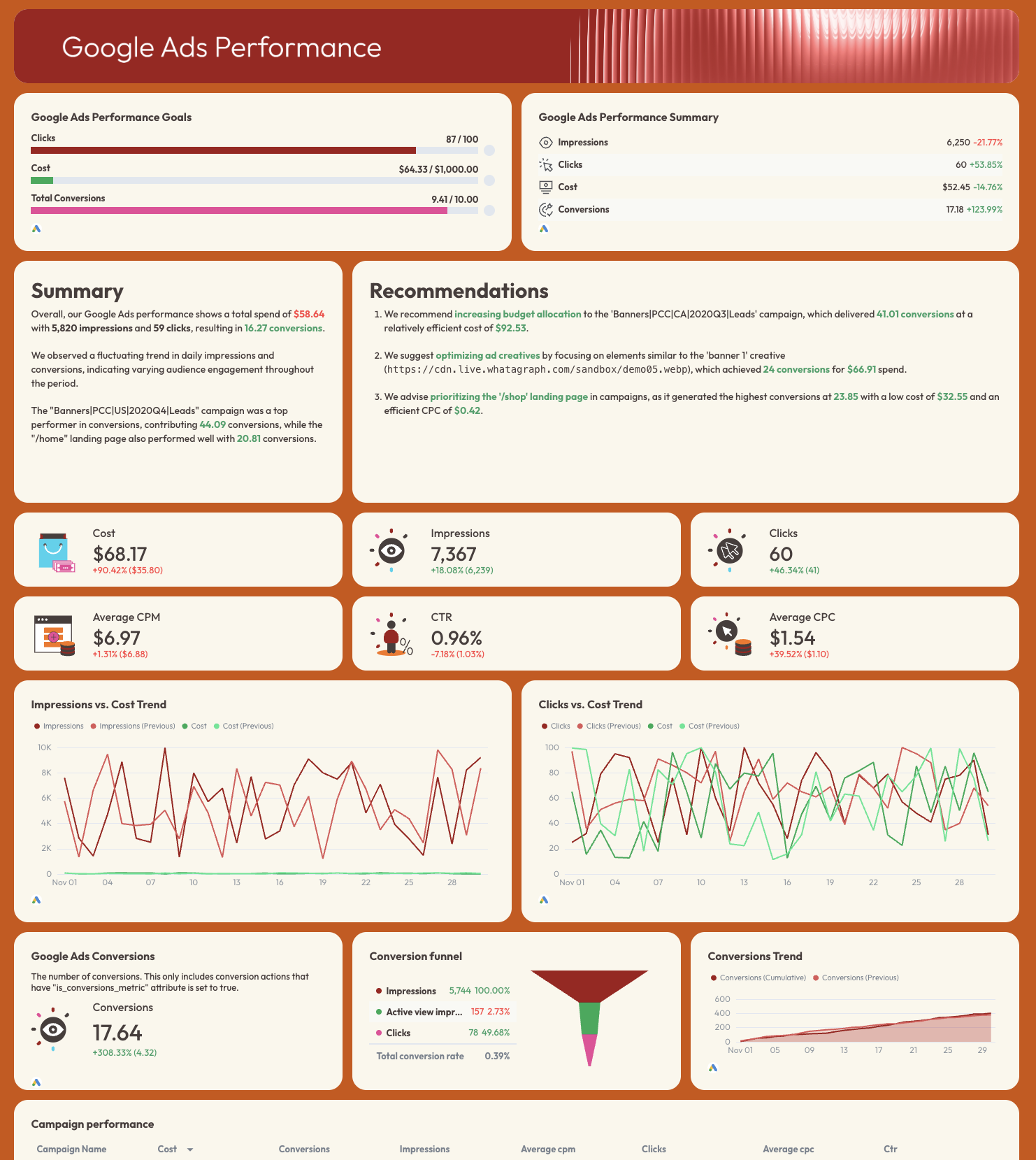
Google Ads typically captures high-intent demand from buyers and sellers searching for specific properties, neighborhoods, or services.
What to include:
- Ad spend, clicks, and conversion rate
- Cost per lead and cost per inquiry
- Performance by campaign (e.g. listings, sellers, branded search)
- Keyword-level insights tied to listing price or location
- Trend charts showing spend vs. leads over time
- Contribution to pipeline where CRM data is available
This section helps agencies justify budget decisions and adjust marketing efforts toward campaigns that drive real demand.
5. Facebook Ads
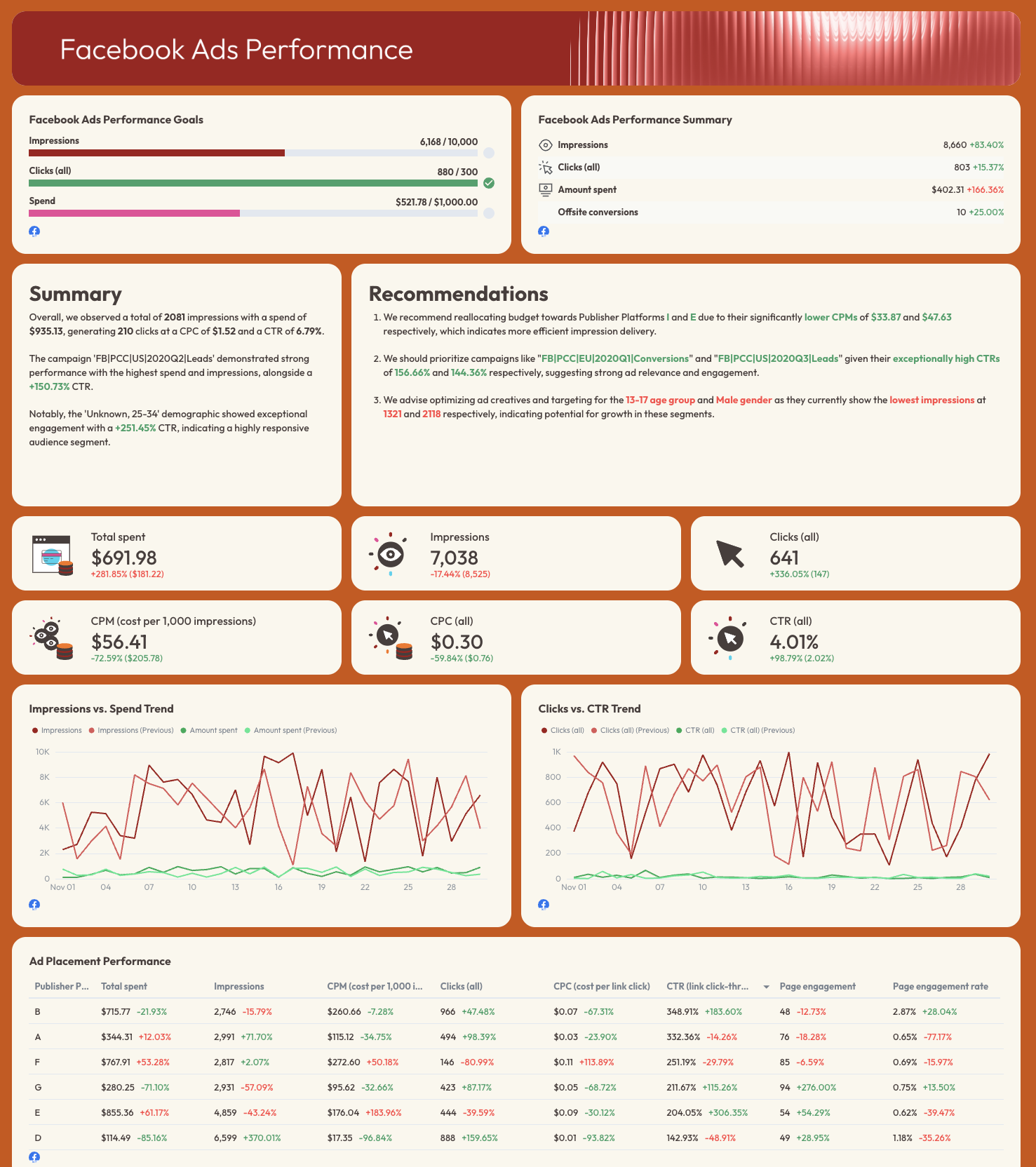
Facebook Ads support both demand generation and brand visibility for real estate agents and developers, especially through video, listing promotions, and retargeting.
What to include:
- Reach, impressions, and clicks
- Leads generated from listing and lead-form campaigns
- Engagement and video views for property content
- Cost per lead and cost per result
- Audience performance insights (age, location, interests)
- Trend charts tied to campaign launches or seasonal pushes
This helps connect social advertising to interest, inquiries, and eventual real estate sales.
6. Organic Social Media (Facebook & Instagram)
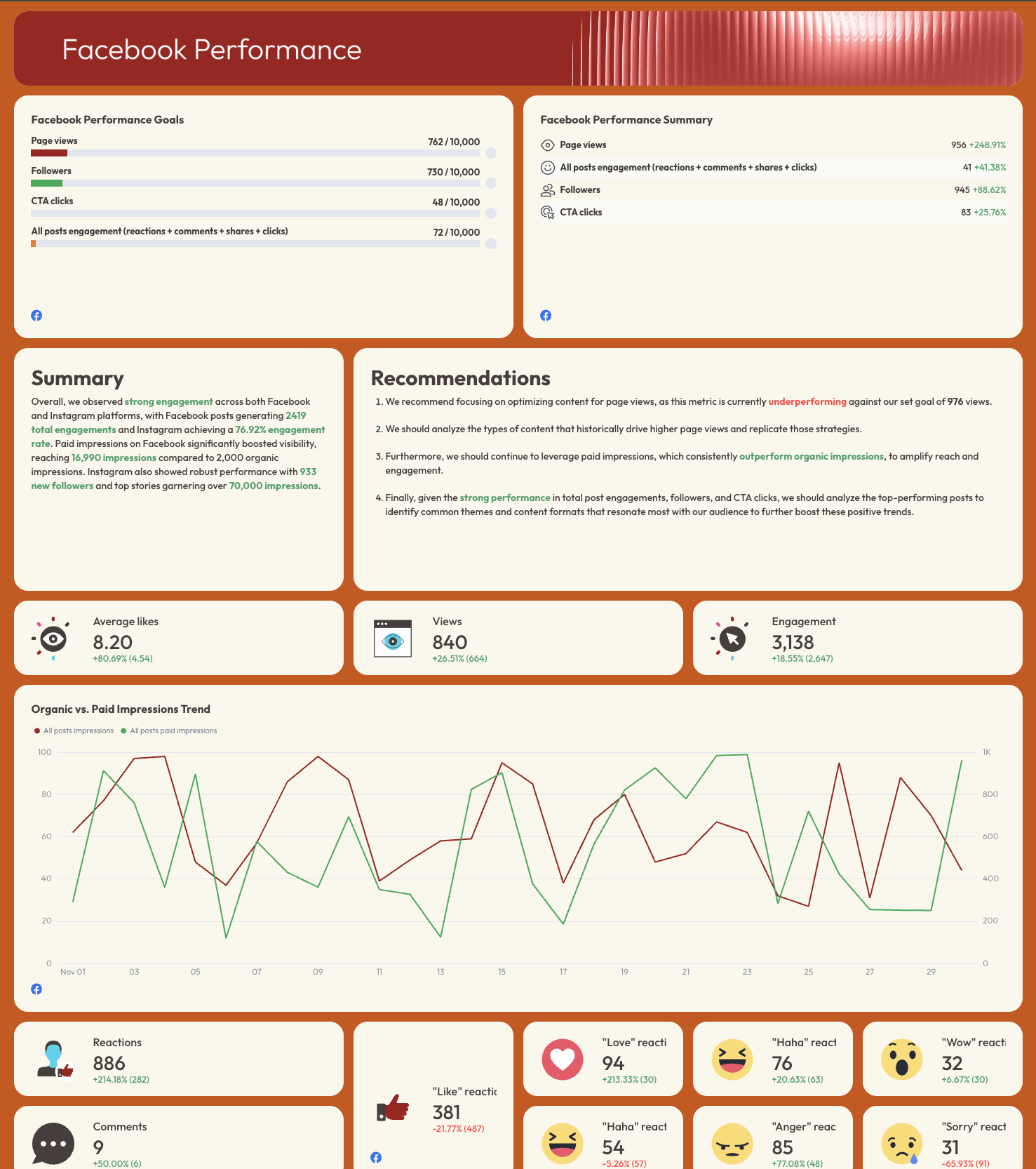
Organic social media supports brand awareness, listing exposure, and community building, especially for agents and brokerages building long-term trust.
What to include:
- Follower growth and engagement over time
- Engagement by content type (listing photos, reels, walkthroughs)
- Carousel showing the performance of posts and/or story promoting open houses
- Reach and impressions trends
This section gives context to how social media supports the overall marketing channels mix.
7. Email Marketing

Email remains one of the most reliable ways to nurture leads over long sales cycles in real estate. With tools like ActiveCampaign, you can tie emails all the way to deals and deal values.
What to include:
- Email performance metrics like sends, opens, open rate, and clicks
- Inquiries or replies generated from email campaigns
- Performance of listing alerts and follow-up sequences
- Deal counts and value from email marketing
- Conversion rate from email traffic
- Trend charts showing engagement over time
This helps show how email supports ongoing relationships with buyers, sellers, and investors beyond the first touch.